
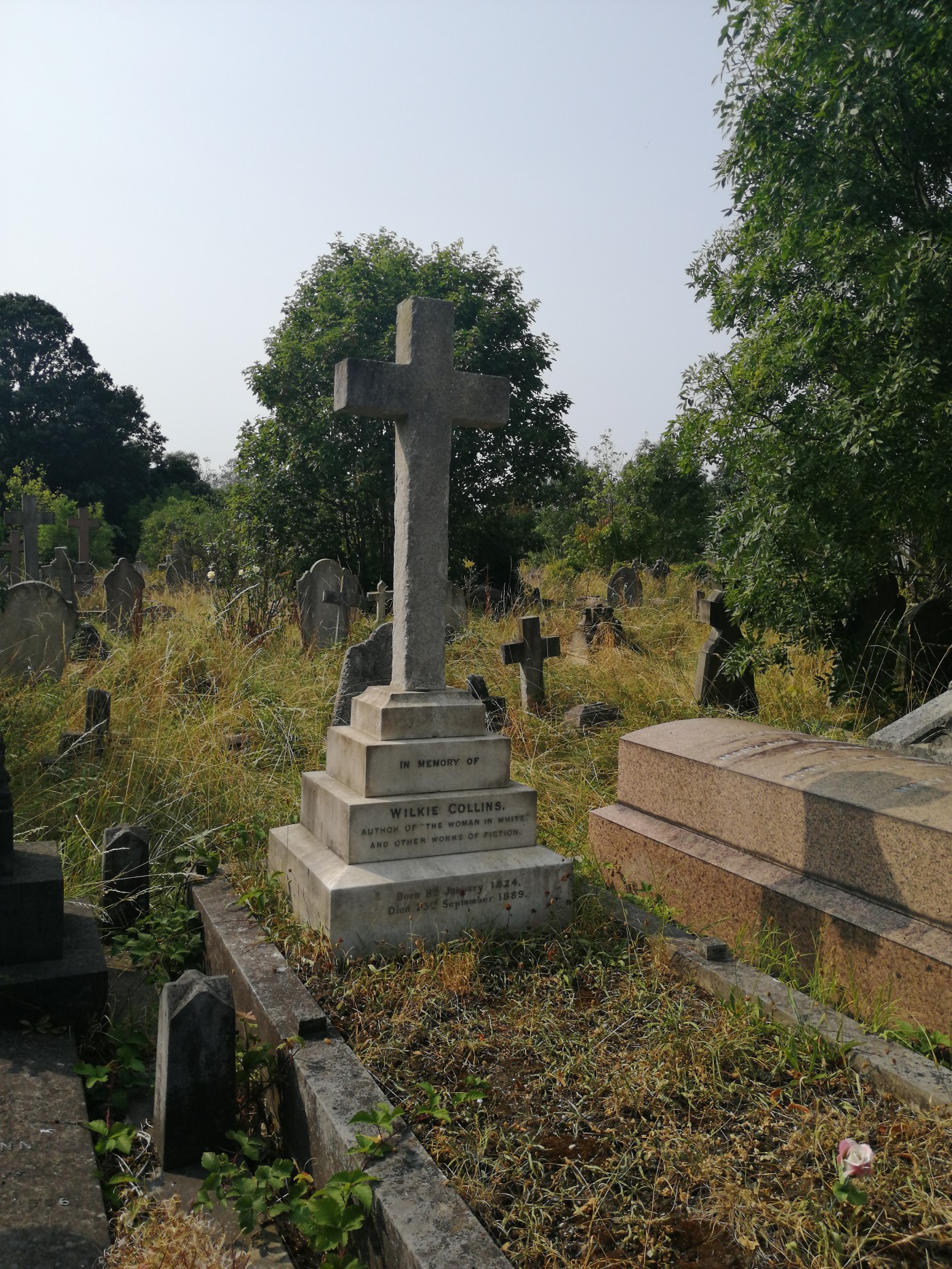
This summer we took a trip to London, making a not-so-quick detour to Kensal Green Cemetery to find Wilkie Collins’ grave. The Victorian author is most well-known for his mystery novels “The Woman in White” and “The Moonstone”, and was friends with Charles Dickens.


Wilkie Collins was born in London in 1824. His father, William Collins, was a Royal Academy landscape painter, and the young Collins grew up in a creative but deeply religious environment. The Collins lived in London to begin with, but between 1836 and 1838, they lived in Italy and France. Both places left a big impression on young Wilkie.
Collins started writing in 1848 whilst working as a clerk, and although he completed his studies in Law, he never formally practised. Meeting Charles Dickens in 1851 had arguably the biggest influence on him and his writing career. Collins’ story “A Terribly Strange Bed” was published in Dickens’ journal Household Words in April 1852 and in May of the same year he went on tour with Dickens’ company of amateur actors.
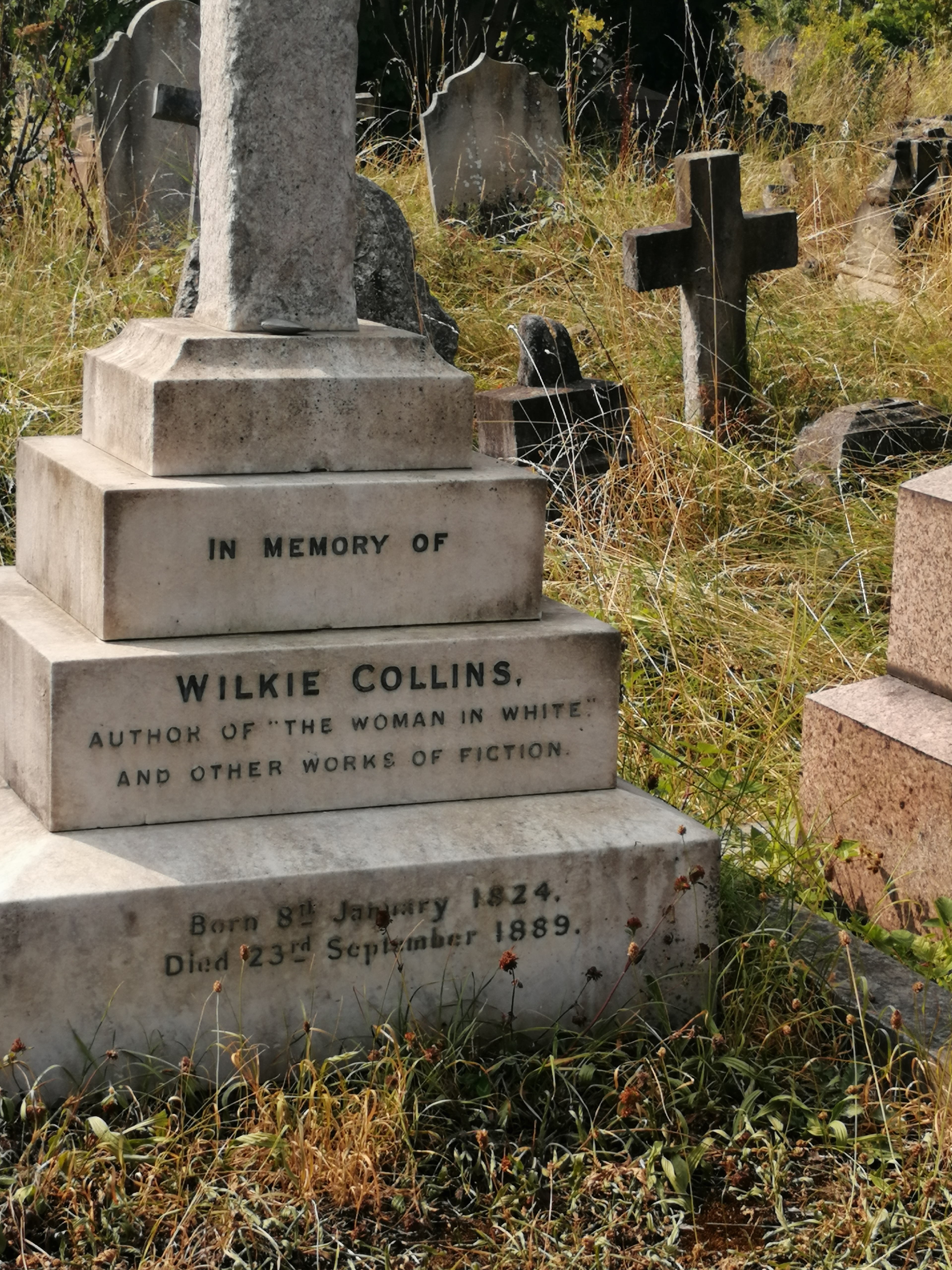

His two most well-known books are noted to have had a big impact on the development of detective novels. “The Woman in White” (1859) is a mystery novel that features sleuthing techniques later associated with private detectives, while “The Moonstone” (1868) is considered by many to invent the modern detective story within the English novel.
Collins’ works often focused on social issues, especially those related to the status and treatment of women. Interestingly, he didn’t believe in marriage but this didn’t stop him from having long-term relationships and fathering children. For ten years or so he lived with widow, Caroline Graves and her daughter, but in 1868 began an affair with 19-year-old Martha Rudd and had three children with her. He divided the last 20 years of his life between her home and the one he shared with Caroline.
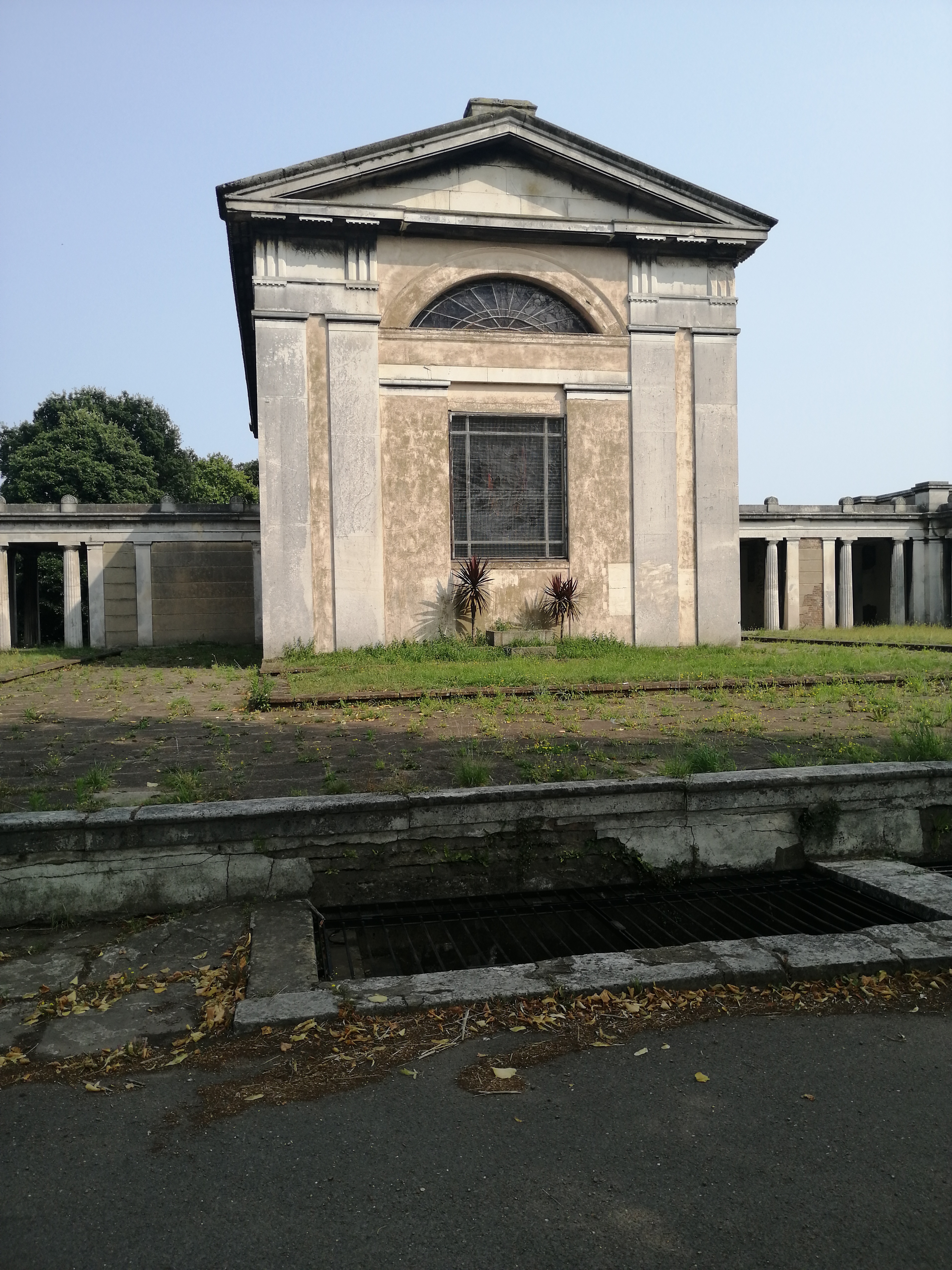


Walking through Kensal Green Cemetery on a scorching hot day was a slightly surreal experience. The place was pretty much deserted and overgrown in many areas. I’d never visited before and hadn’t realised how crammed in the graves were, many set far away from the path so you had to thread through them like a maze. Finding Wilkie Collins’ grave took a while, and involved clambering over weeds and trying not to get stung. Tellingly, I also tried to find William Makepeace Thackeray’s grave which was apparently nearby – but even with Google Maps help found it impossible to track down.
What do you think? Are you a fan of Wilkie Collins, or visited Kensal Green Cemetery before? Let me know in the comments.


 Wordland
Leave a comment