
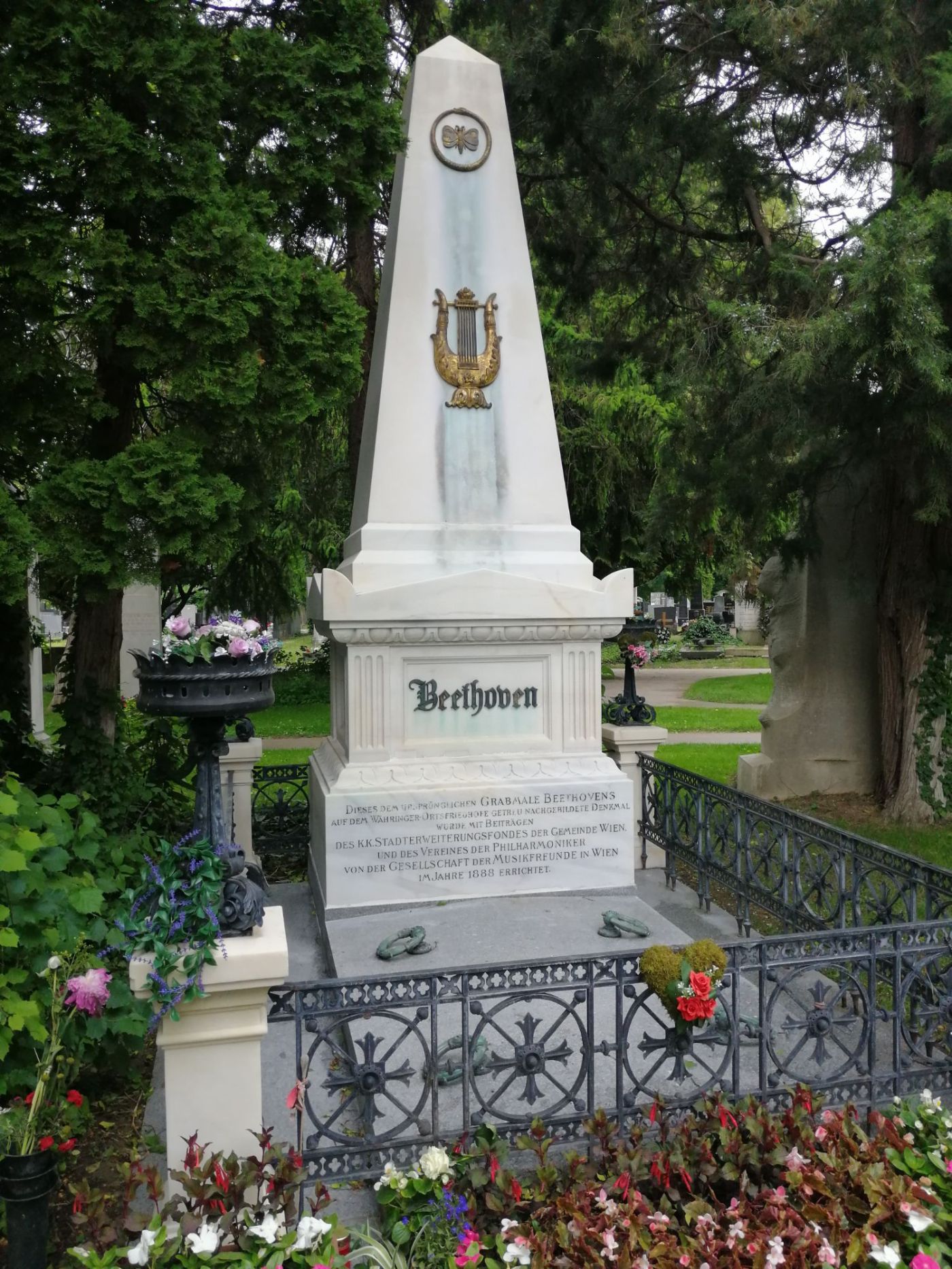
Vienna is the capital of Austria and well-known for its music. It’s Opera House is world-renowned and many of the world’s greatest composers both lived and died here. In fact, you can find a whole bunch of them, playing together for eternity, in Vienna’s Central Cemetery.
Watch our YT Short vid about our visit
When is “central” not “central”?
If you’re looking for the cemetery in the centre of the city, you’re bang out of luck. Despite its name, the central cemetery isn’t physically central. To get there, we took a tram for a bit of a winding journey to the south-east side of the city. It’s “central” because it’s considered the main cemetery of Vienna. It’s also huge.

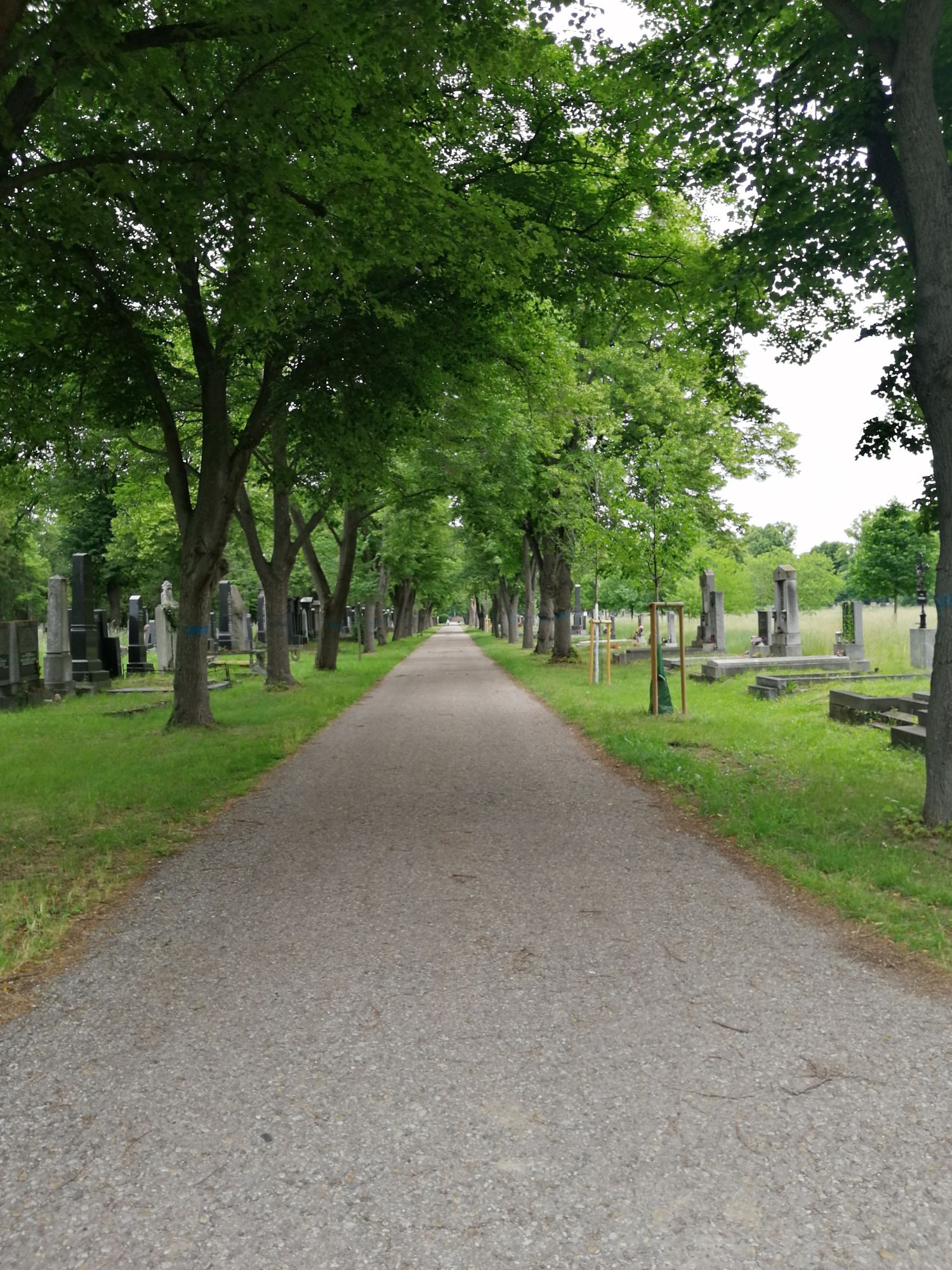
If you want to explore, bring a packed lunch and a map because it will take you a while, sitting at 620 acres. It didn’t come about slowly, but rather was identified as being necessary in 1863 as industrialisation swelled the number of city inhabitants. It was designed in 1870 and opened in 1874, on a large area in the district of Simmering.
As well as the famous graves, there are plenty of fascinating monuments, and glimpses of the city’s history, such as this pile of gravestones destroyed by bombs during World War 2.

The cemetery has spaces for all faiths including Christians of various denominations, Jews, Muslims and Buddhists. And in one section, lies a whole group of famous composers.
Honorary Graves
Whilst, it’s quite handy actually, to find all of them in one place, it’s also no accident. Because of the cemeteries position, it wasn’t popular for visitors (because even cemeteries need tourists), so the authorities needed a way to attract them. And what better than by chucking in a few “ehrengrab” or honorary graves. Vienna being Vienna, composers were of course going to be included.
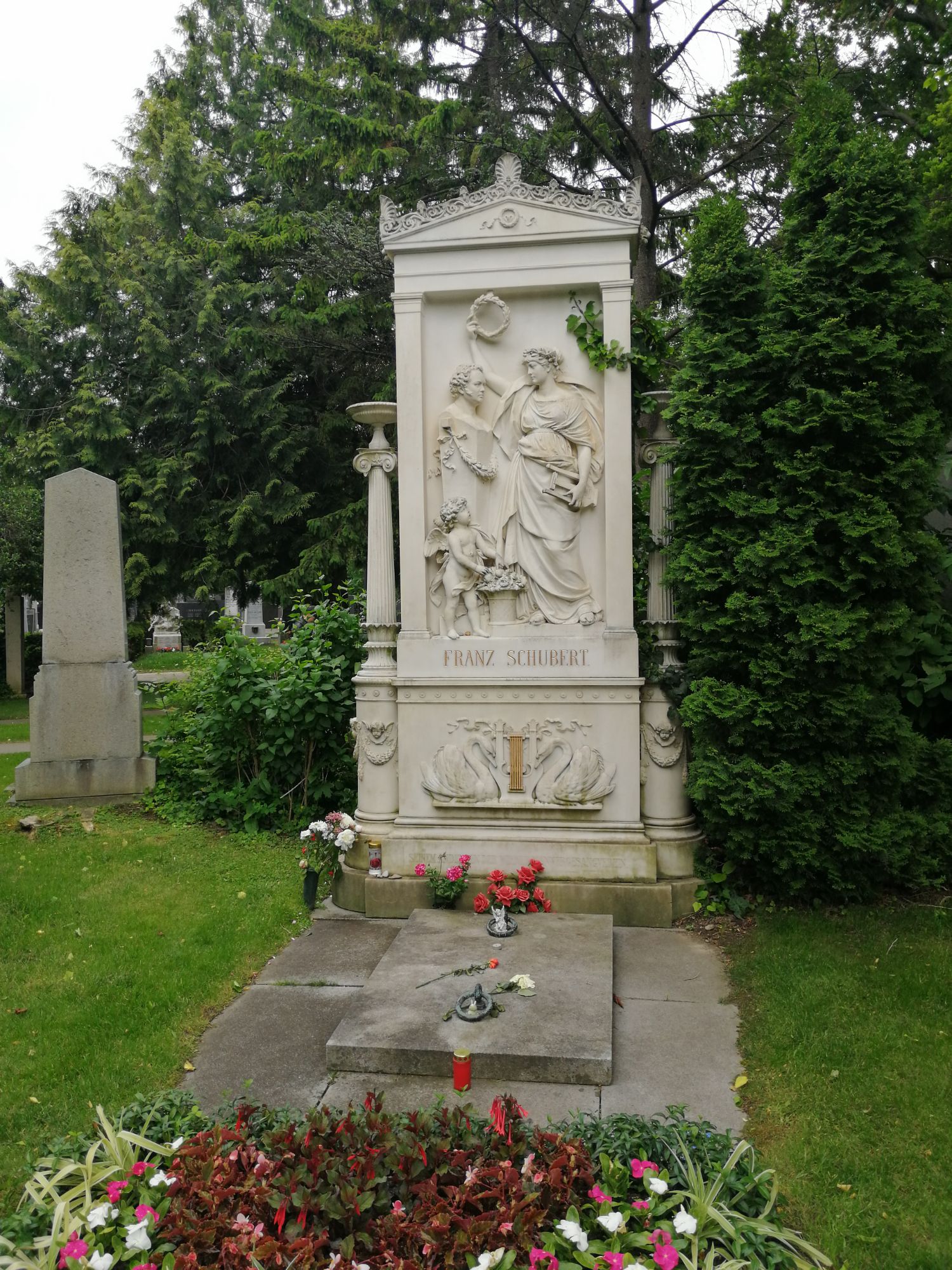


In this area you’ll find Ludwig Van Beethoven, Franz Schubert, Johannes Brahms, Johann Strauss II, and many more all interred together. Beethoven and Schubert were actually moved here from where they were originally buried in Währinger Ostfriedhof. But you’ll note there’s no Mozart, bar a memorial.
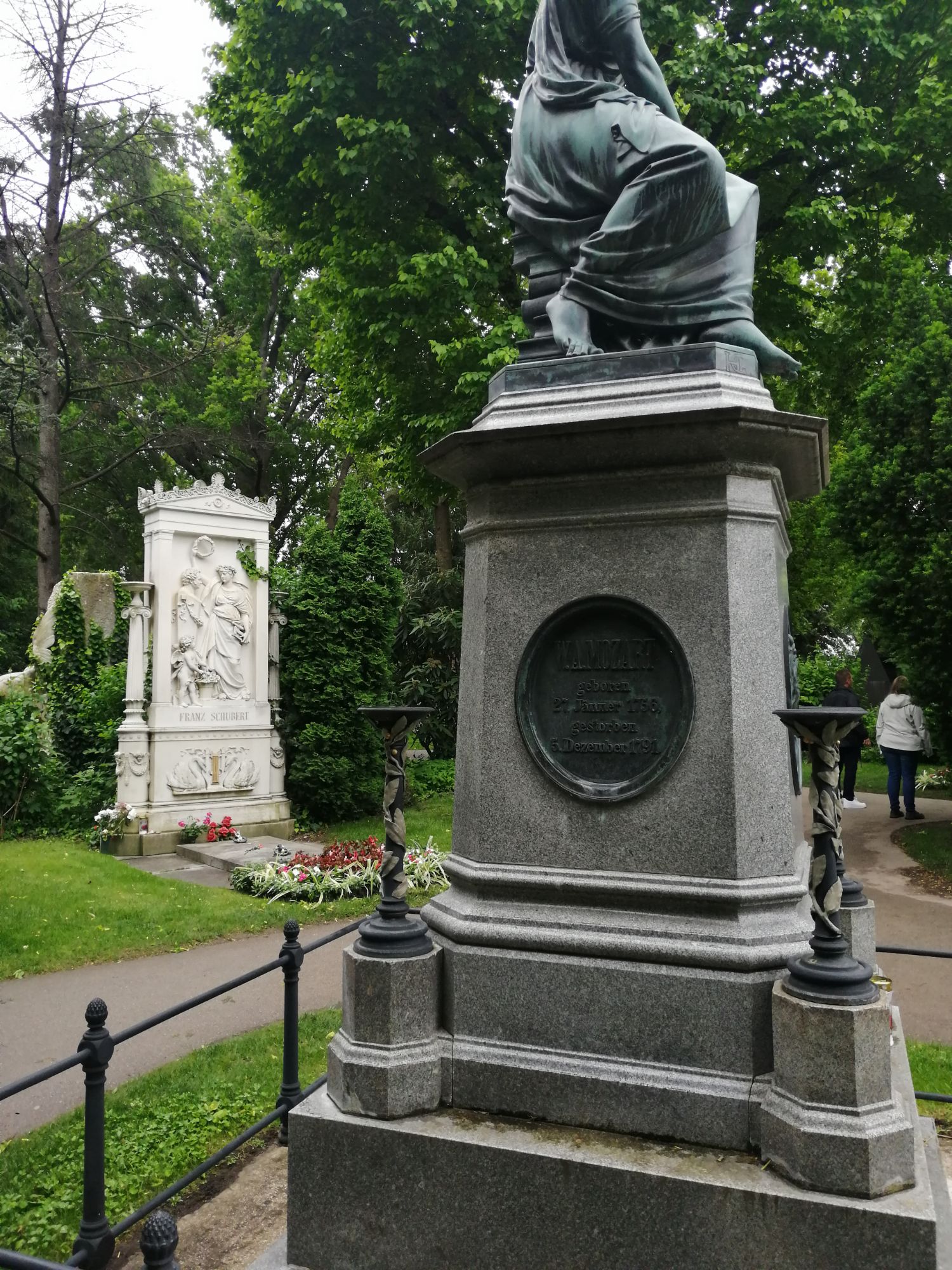
Where’s Mozart?
You’ll only find a memorial in the central cemetery, not his actual grave. If you want to find that, you’ll need to scoot over to St Marx graveyard instead.
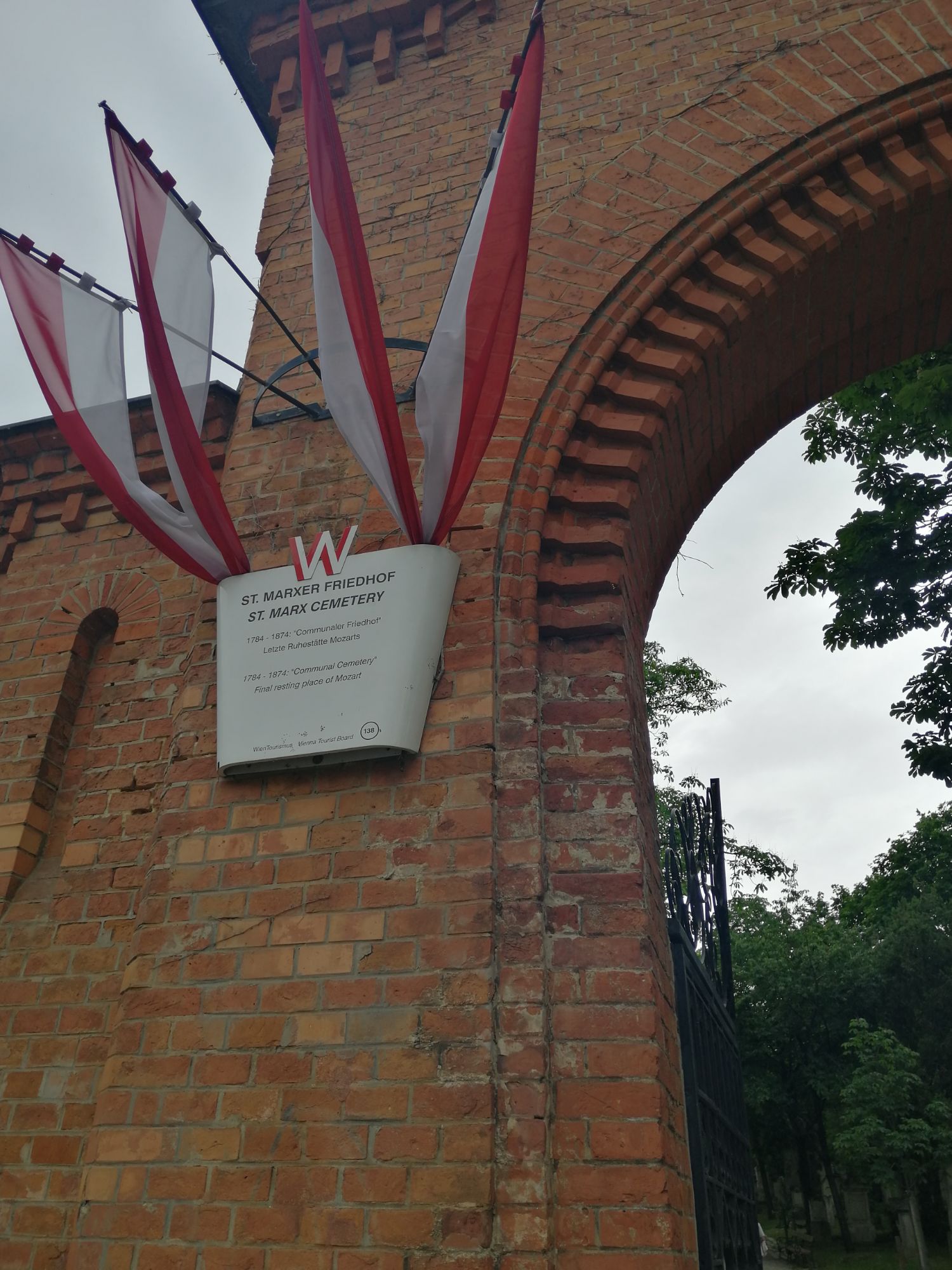
This cemetery is far less grand. It’s also squeezed between a large road, a housing estate and giant metal and glass office block. Here’s where you’ll find Mozart’s final resting place. Sort of.
Y’see back when Mozart popped his clogs, regulations were in place that meant most regular folk weren’t buried with a grave marker. So no-one knows exactly where Mozart is buried. The “grave” you find is actually an educated guess – which also explains why he wasn’t moved to the main cemetery to join his fellow musicians.


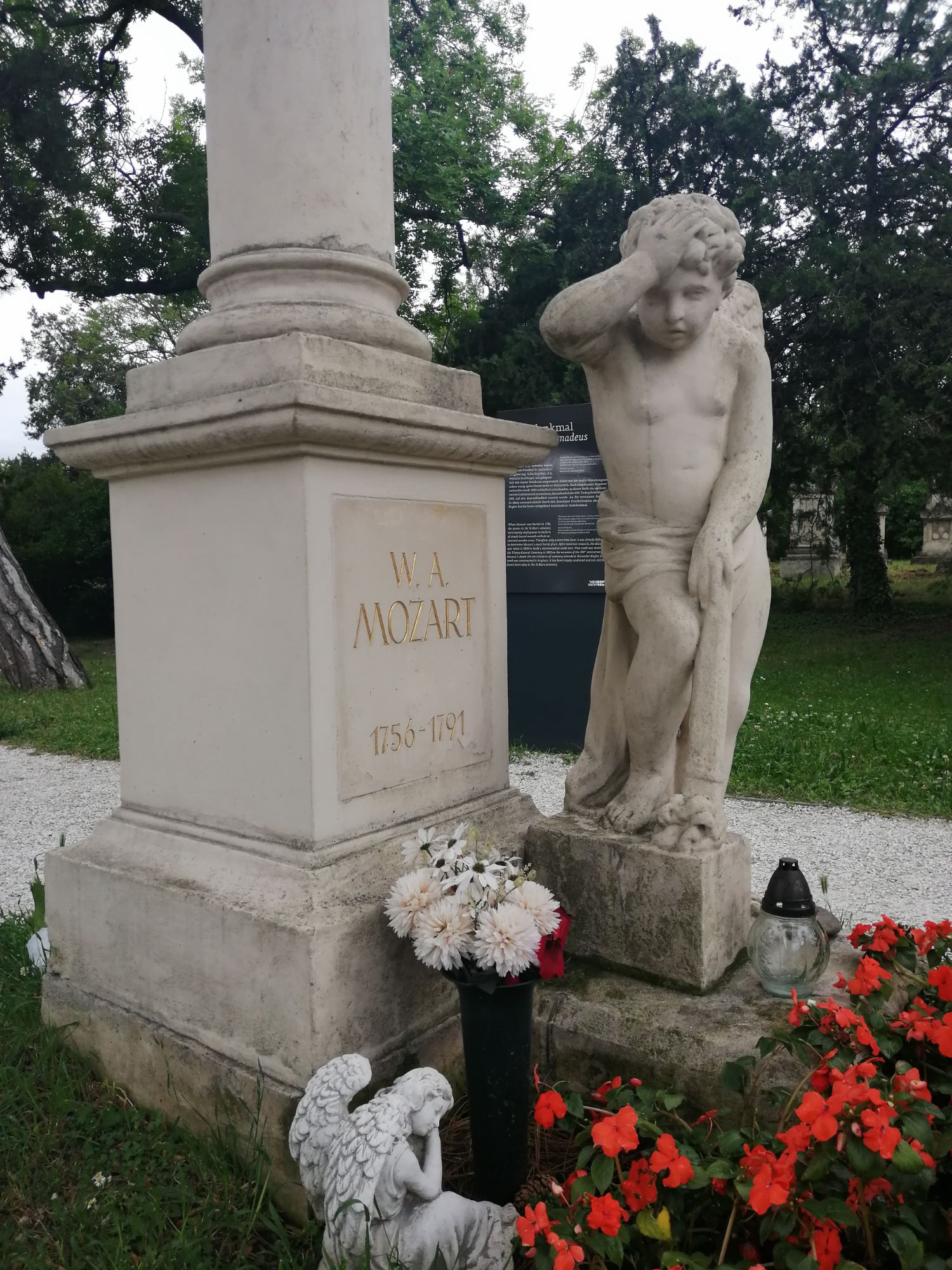
Worth a visit
As well as these graves, you’ll also find the St. Charles Borromeo Cemetery Church, a huge Roman Catholic church built in the Art Noveau style between 1908-1910. We stopped into it before we found the graves, and admired its gold and blue designs.
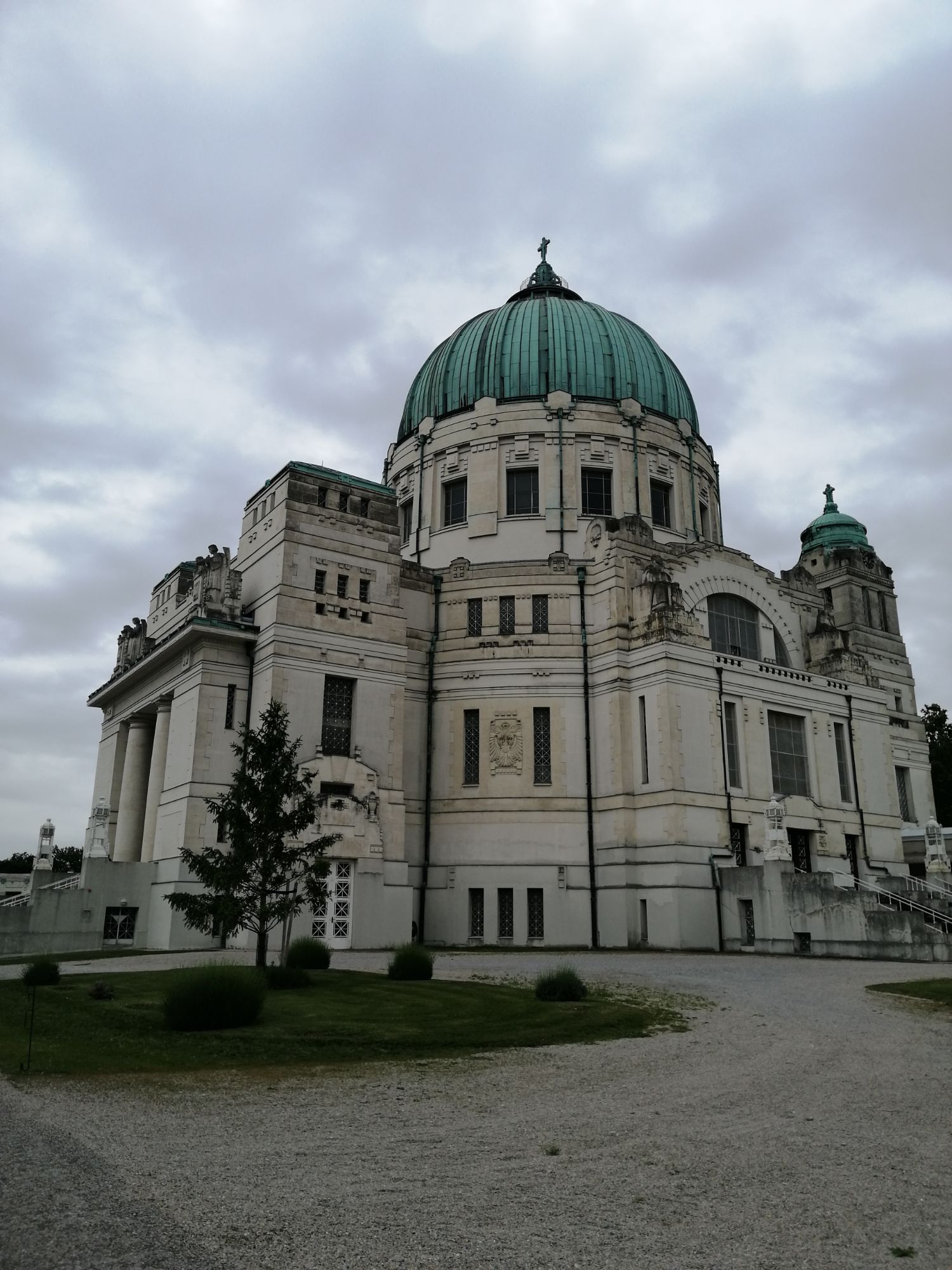

The grounds are spacious and, if you come early, you may even spot wildlife like deer or wild hamsters (sadly, we did not). It’s also free!
What do you think? Have you ever visited this cemetery before? Let me know in the comments.


 Wordland
Leave a comment