
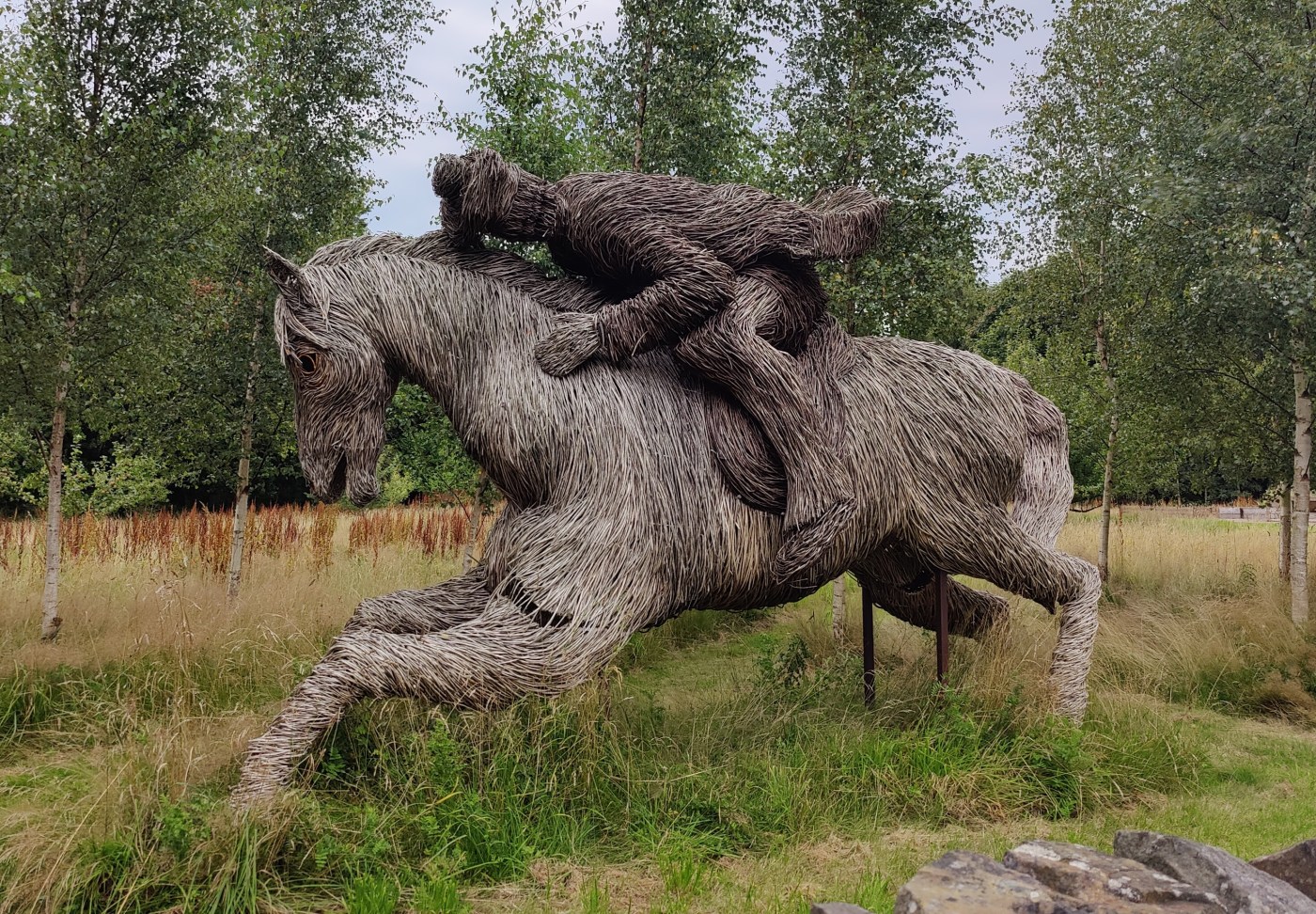
If you’re in Scotland and even vaguely interested in literature – or frankly even if you’re not – you’ve got to visit at least one site associated with the poet Robert “Rabbie” Burns.
I’ll be honest, aside from knowing who he is and the big deal that is Burns Night, I wasn’t overly familiar with Burns’ work before we arrived north of the border. But he’s an icon of Scottish literature and the most famous poet the country has ever produced, so I definitely wanted to see some sites related to him whilst we were in the area. In the end we visited both his birthplace and mausoleum – the main attractions so to speak. I’ll cover the mausoleum in the next post, but first up is his birthplace.
A big part of Burn’s story, are his humble beginnings and the house he was born in still stands in the small town of Alloway. Both the house and associated museum are National Trust for Scotland so if, like us, you’re an English NT member, you can visit for free.
We parked at the large museum car park, then walked to the cottage down the Poet’s Path.
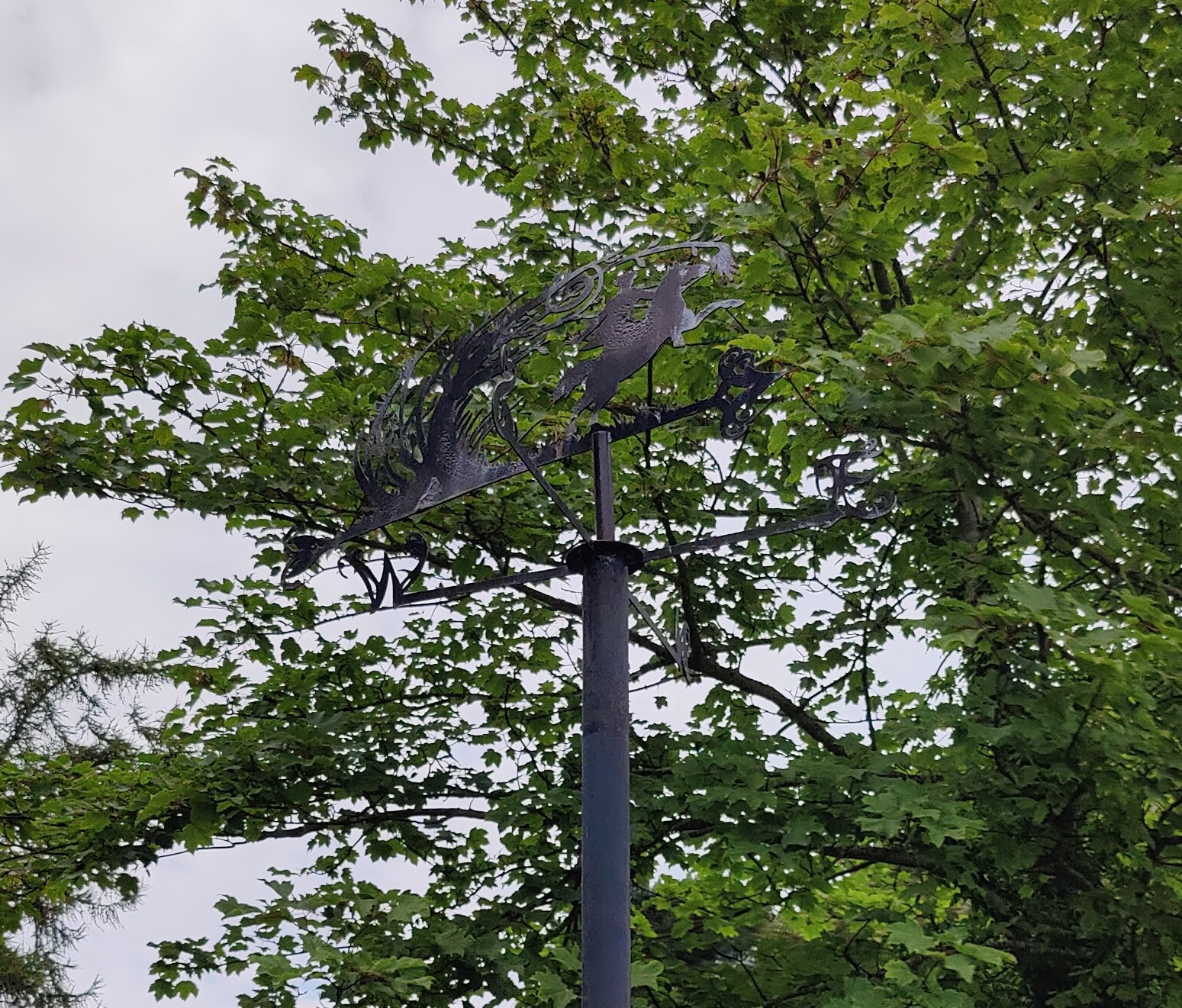
On this short walk you’ll encounter statues related to Burns’ works and weather vanes depicting scenes from one of his most famous poems “Tam o’Shanter”.
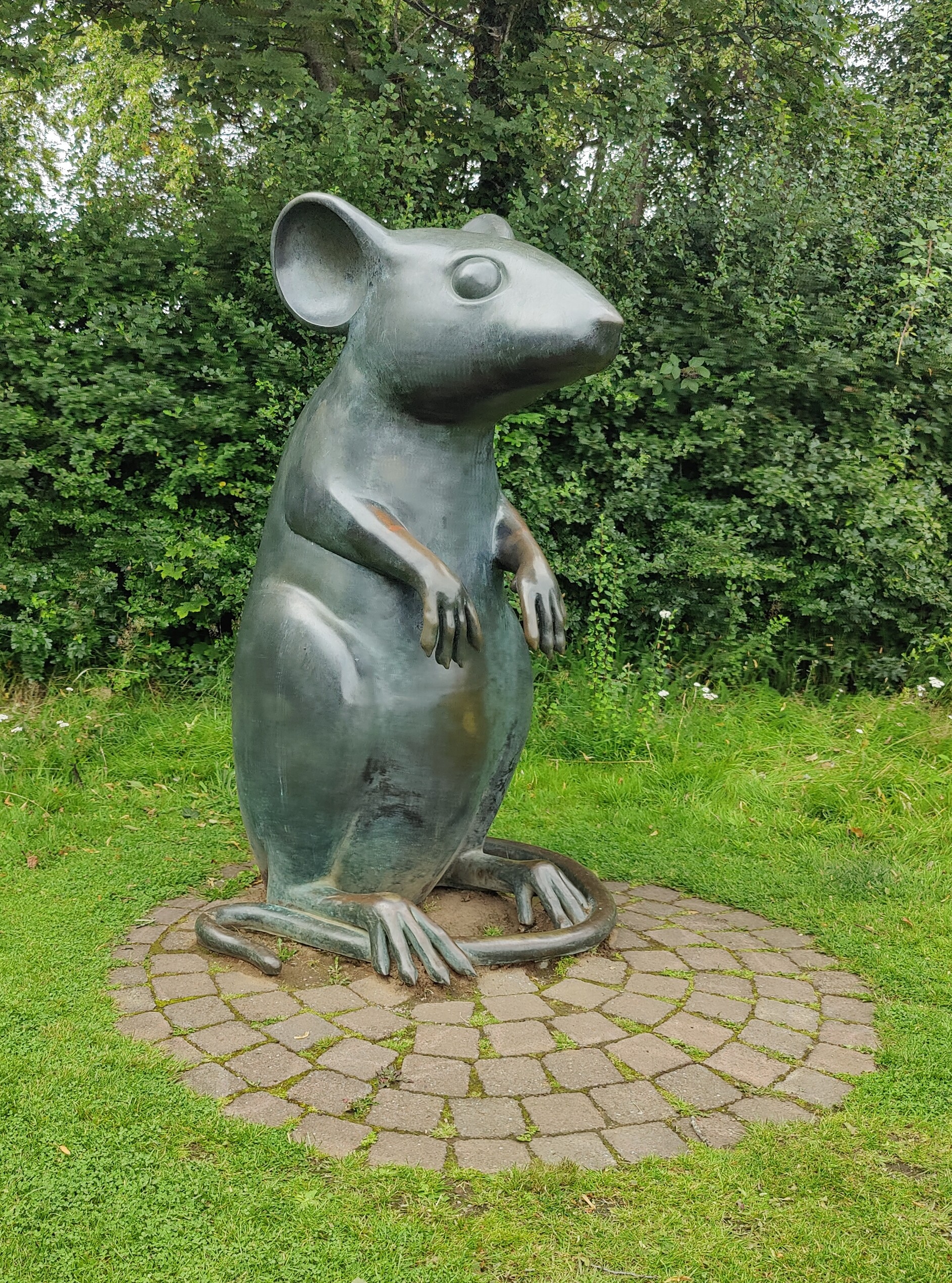
The sculptures include, Kenny Hunter’s ‘wee mouse’ (not so wee) made from cast iron, a tribute to one of Burns’ most endearing poems, “To a Mouse”.
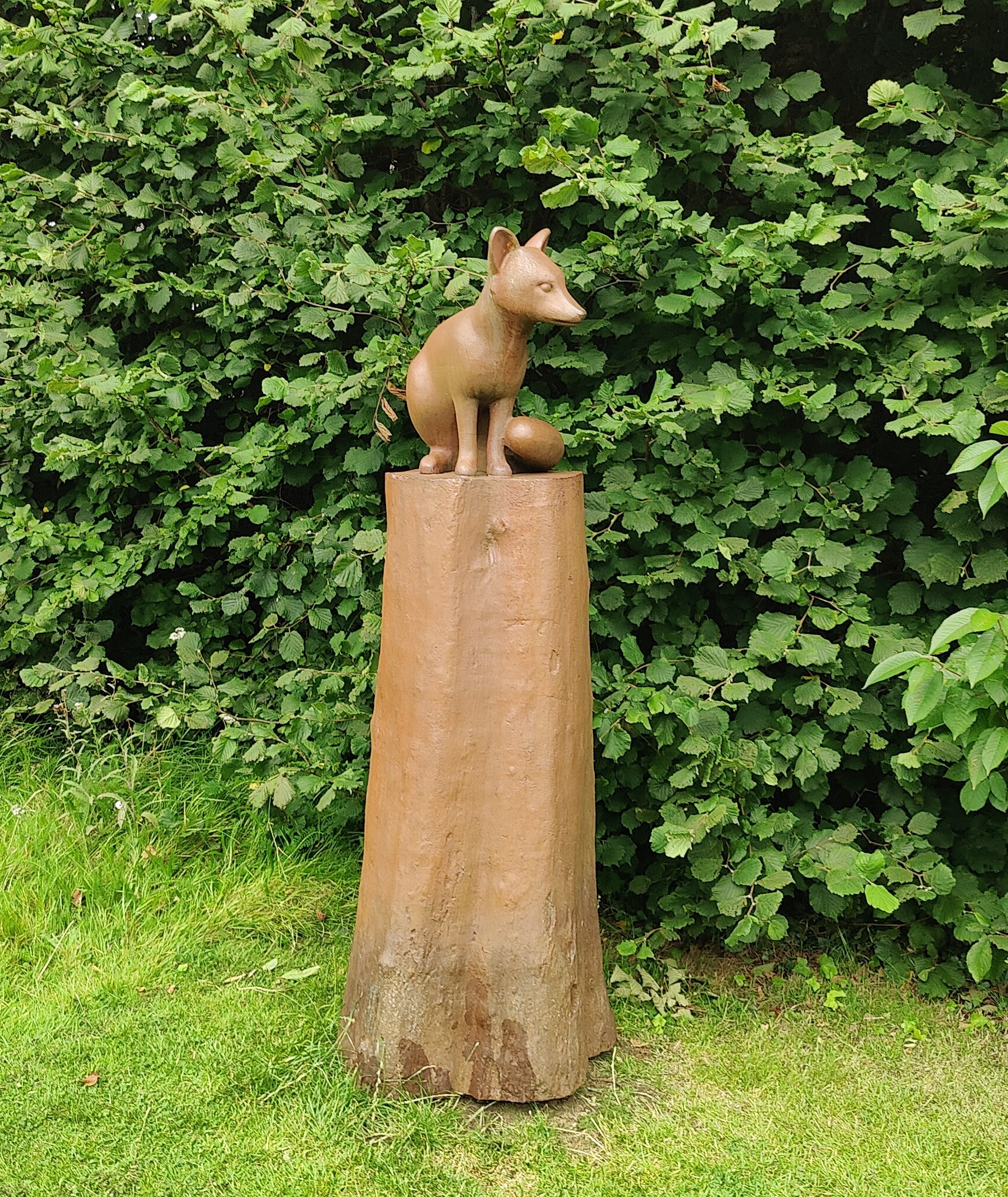
This sculpture is also by Hunter, and is called “Liberty Regain’d”. It’s based on the poem “On Glenriddell’s Fox Breaking his Chain”, which celebrates the escape of a fox that Captain John Riddell kept chained to a dog kennel.
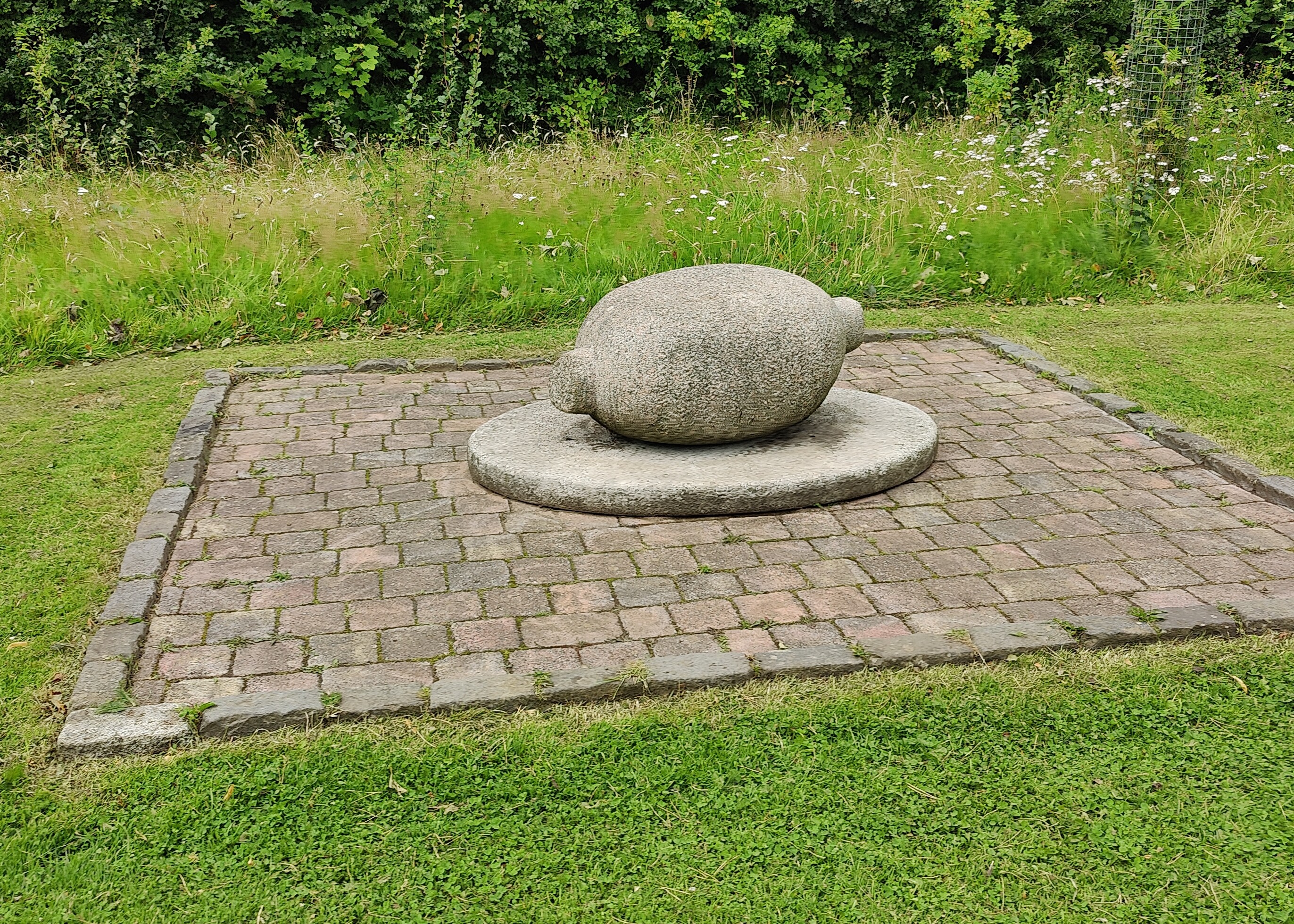
And this is Jake Harvey’s larger-than-life granite haggis. Yup, a haggis. It’s called “Chieftain”, and it’s inspired by “Address to the Haggis”, in which Burns calls the haggis, the “great chieftain o’ the puddin-race”. Now, on to the cottage.
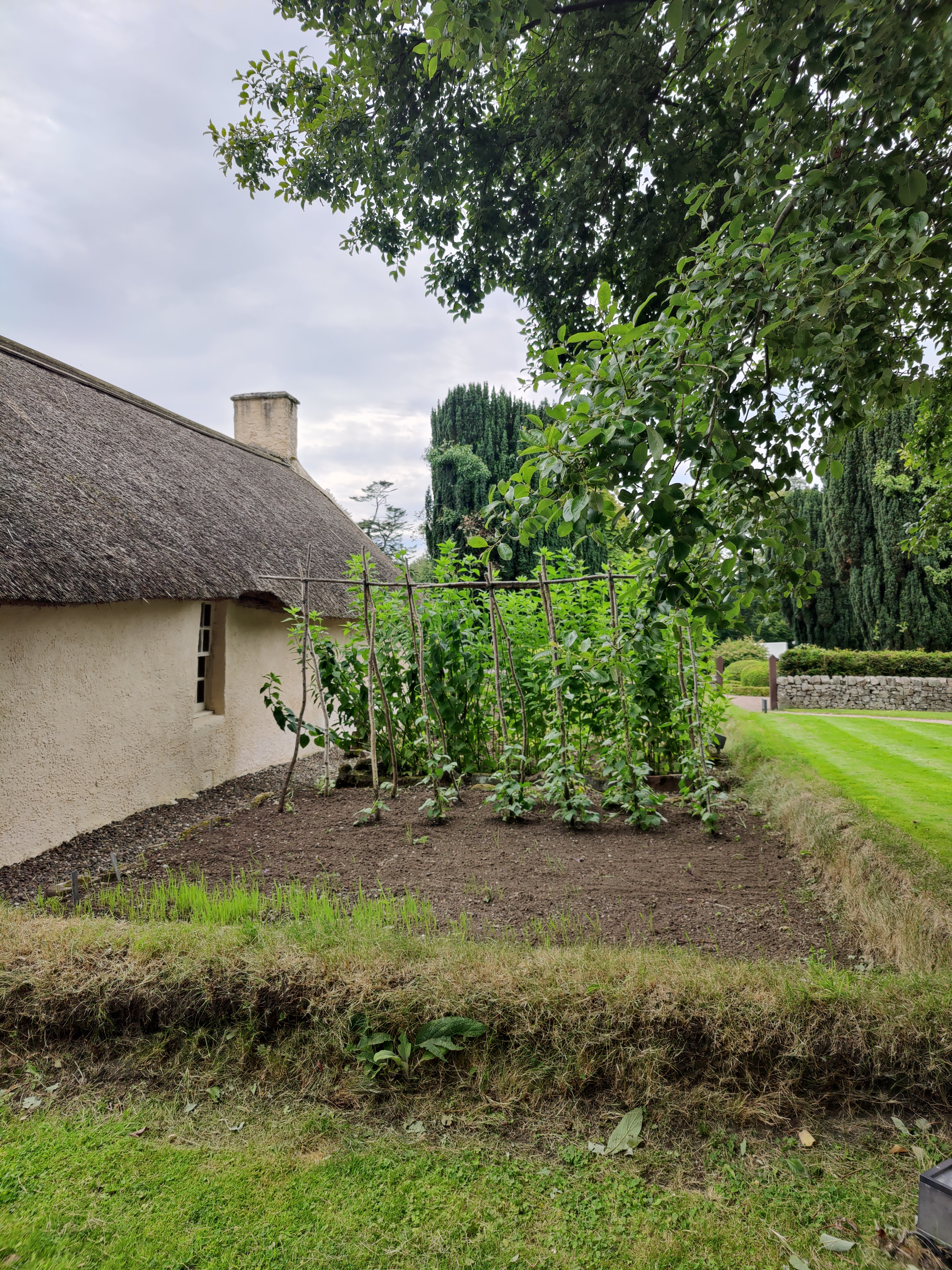
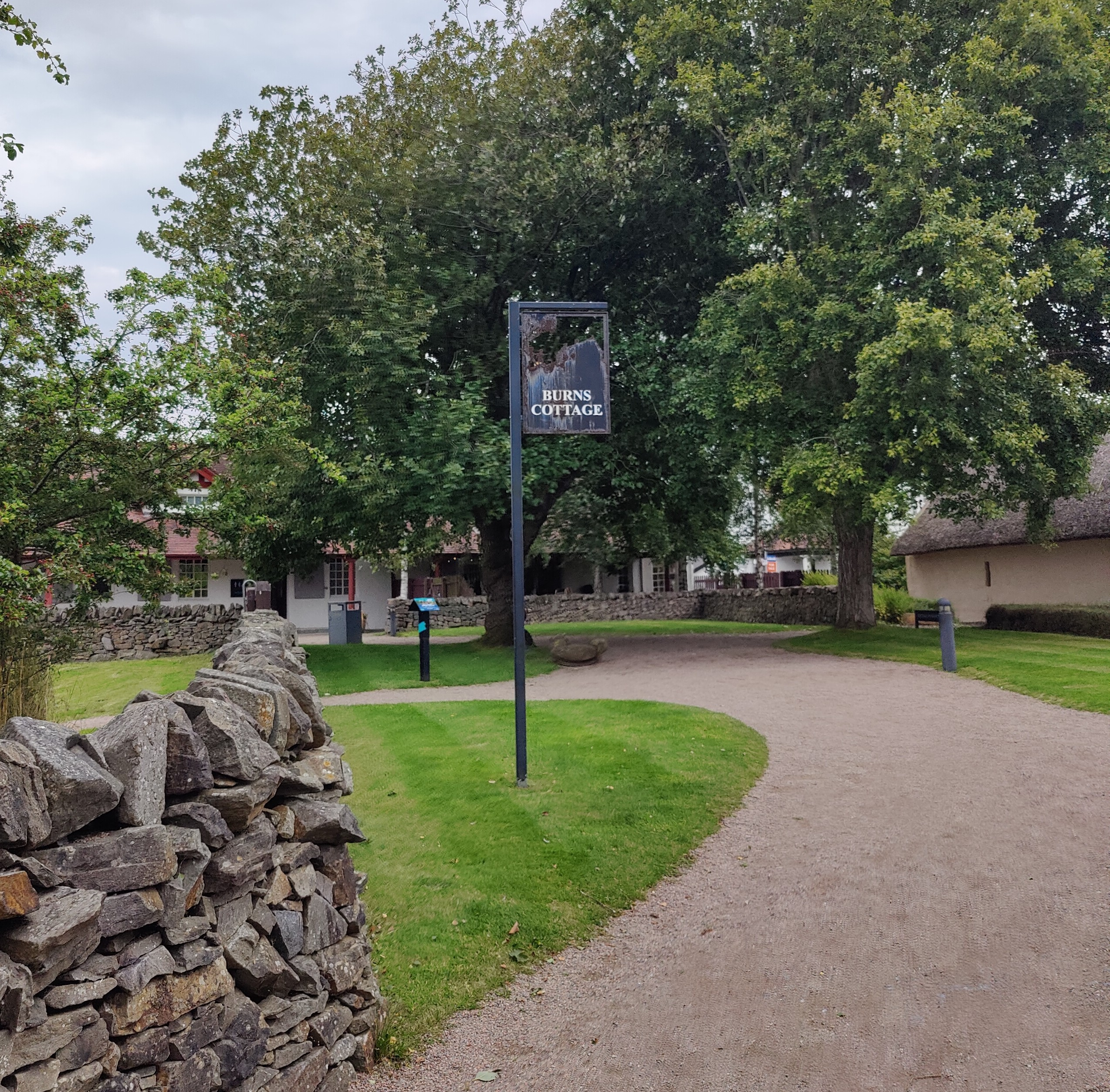
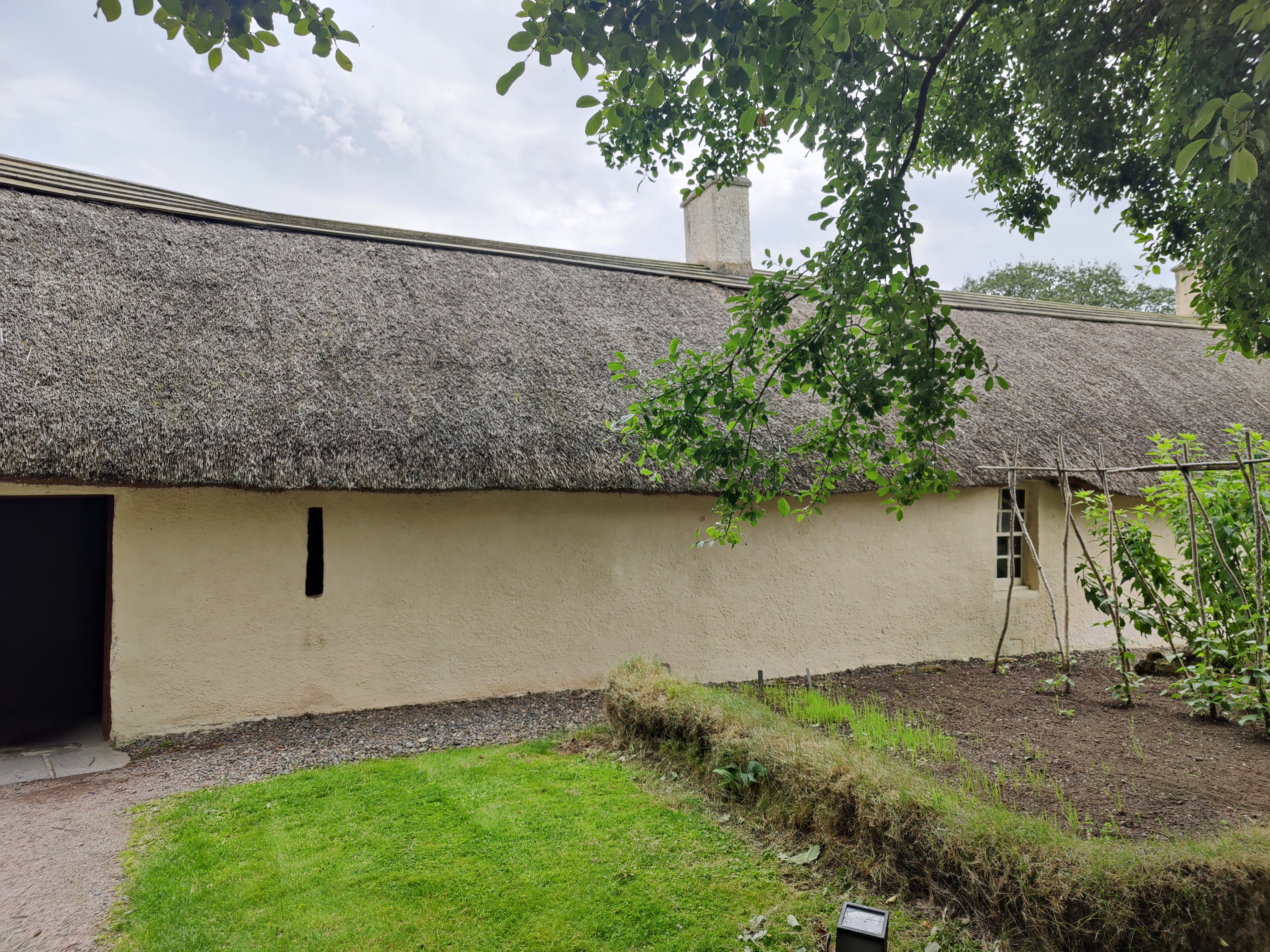
Robert Burns was born in this cottage on 25 January 1759. The place seems large from the outside, but once inside you realise that over half the space was given over to housing animals and farm-related work. The actual areas where six people lived and slept, were not large at all – which is why the family had to move in 1765 when Burns was seven.
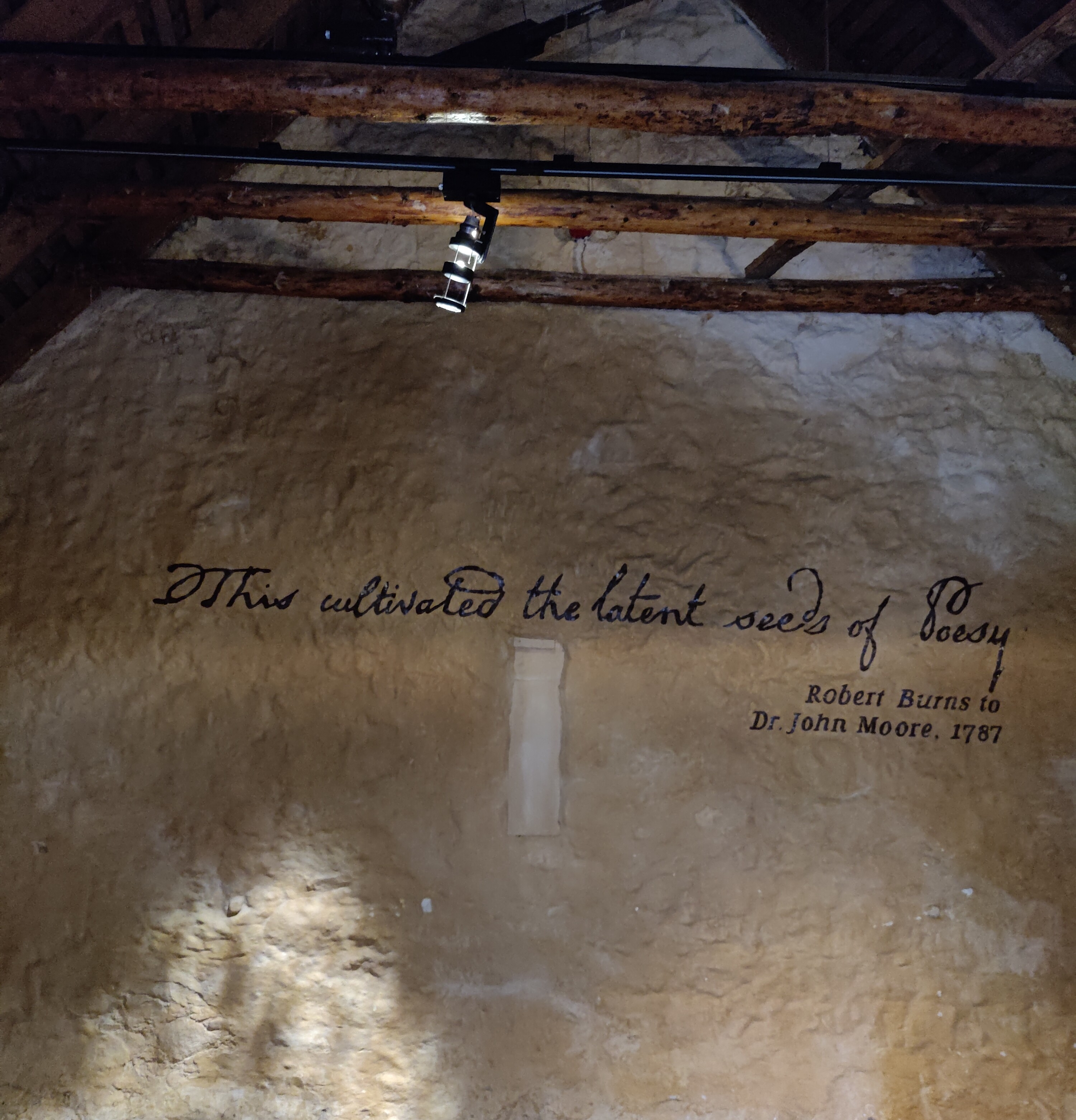
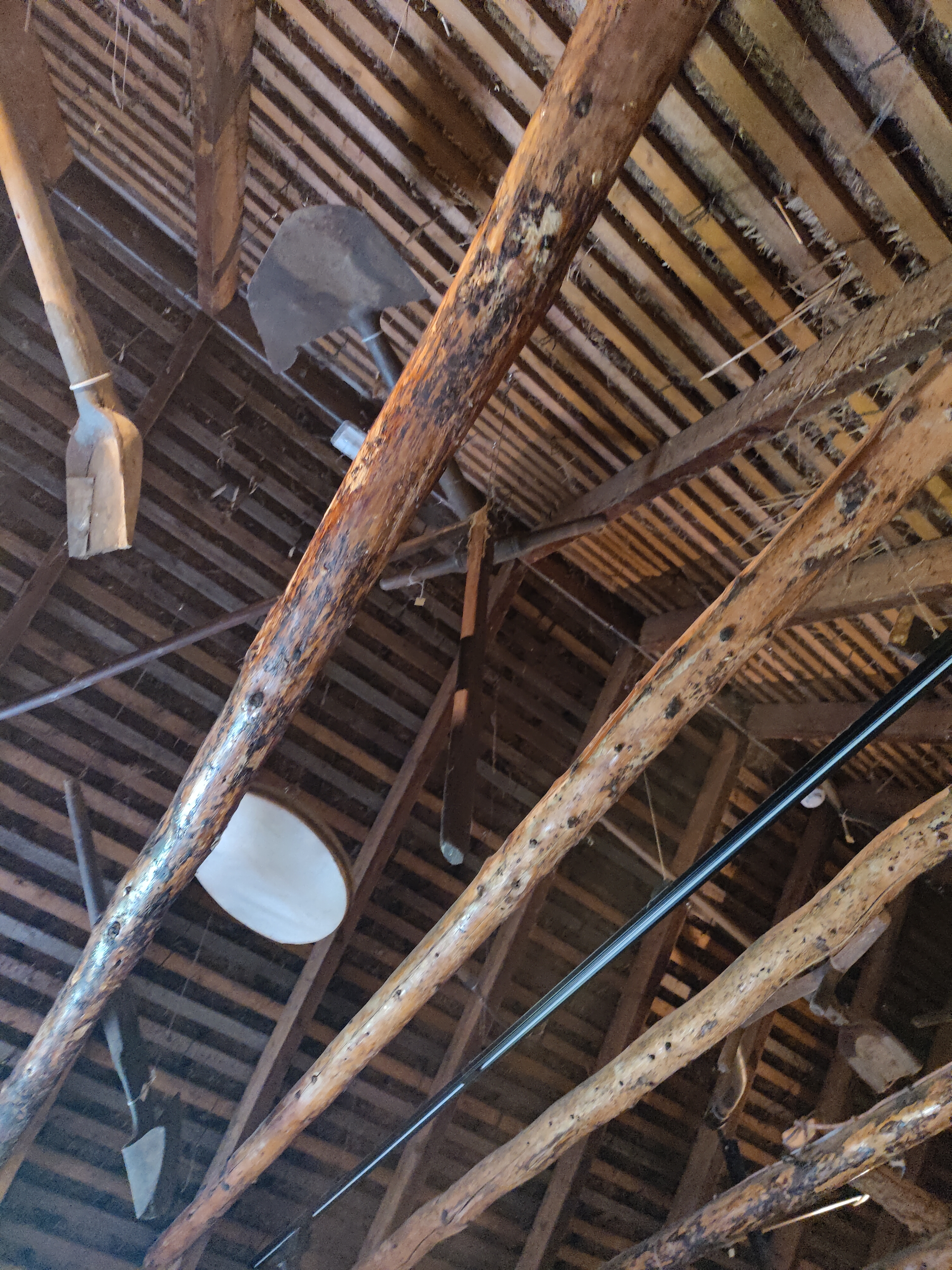
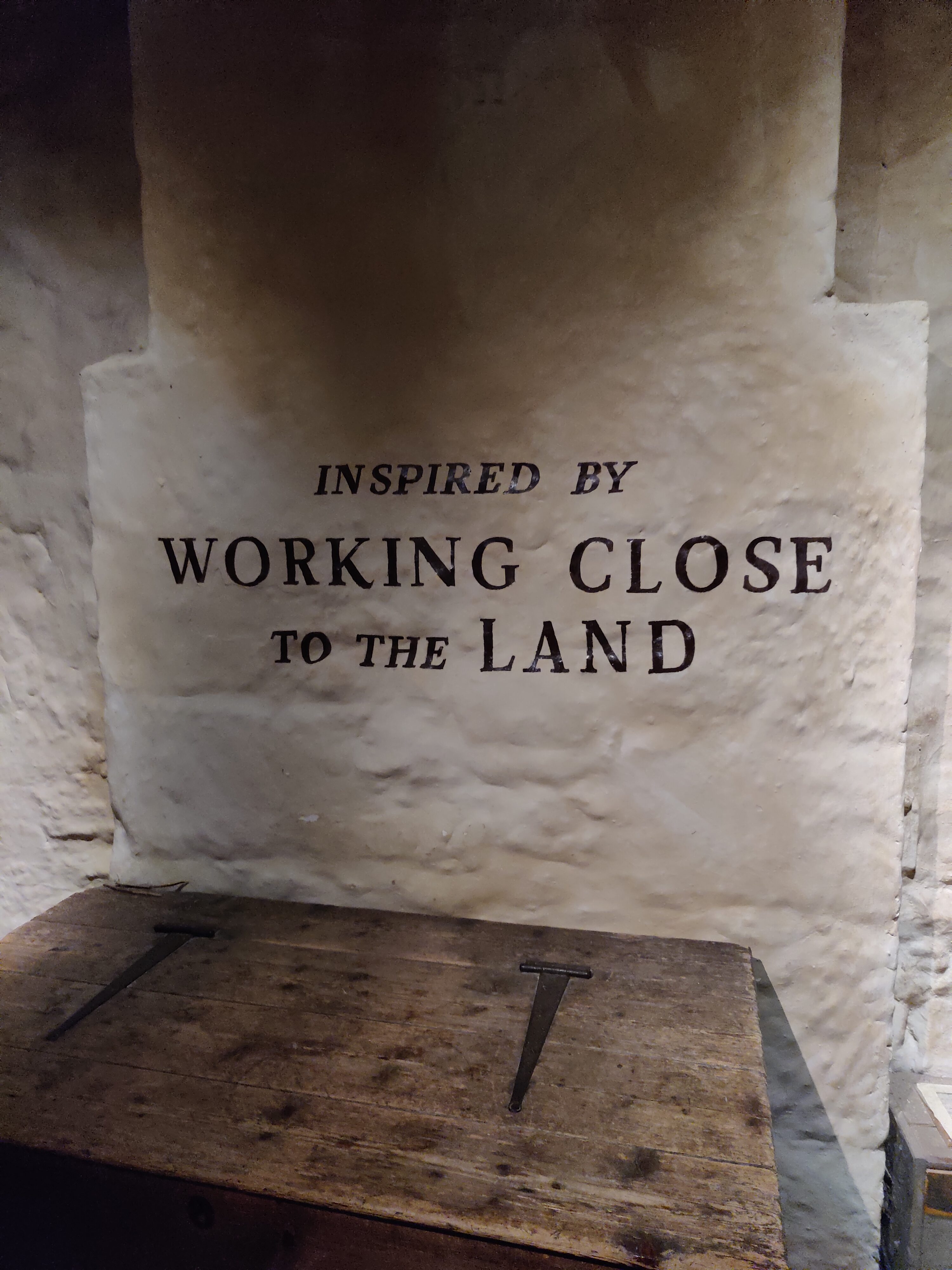
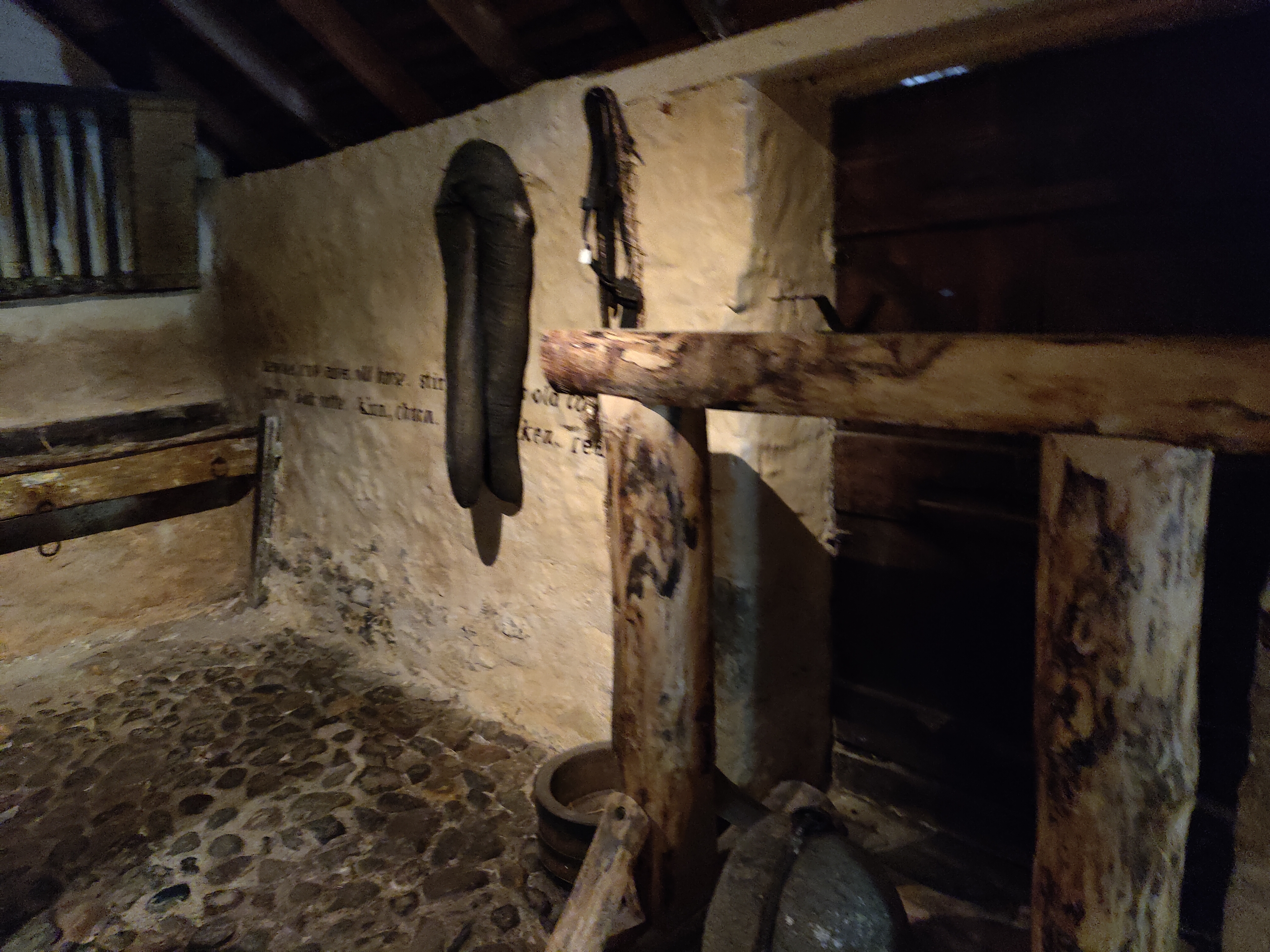
Inside, the walls are painted with words talking about the seeds of inspiration Burns found here. The cottage is small, and it won’t take you long to go through, depending on what you read and how long you choose to stay and listen to the guides.
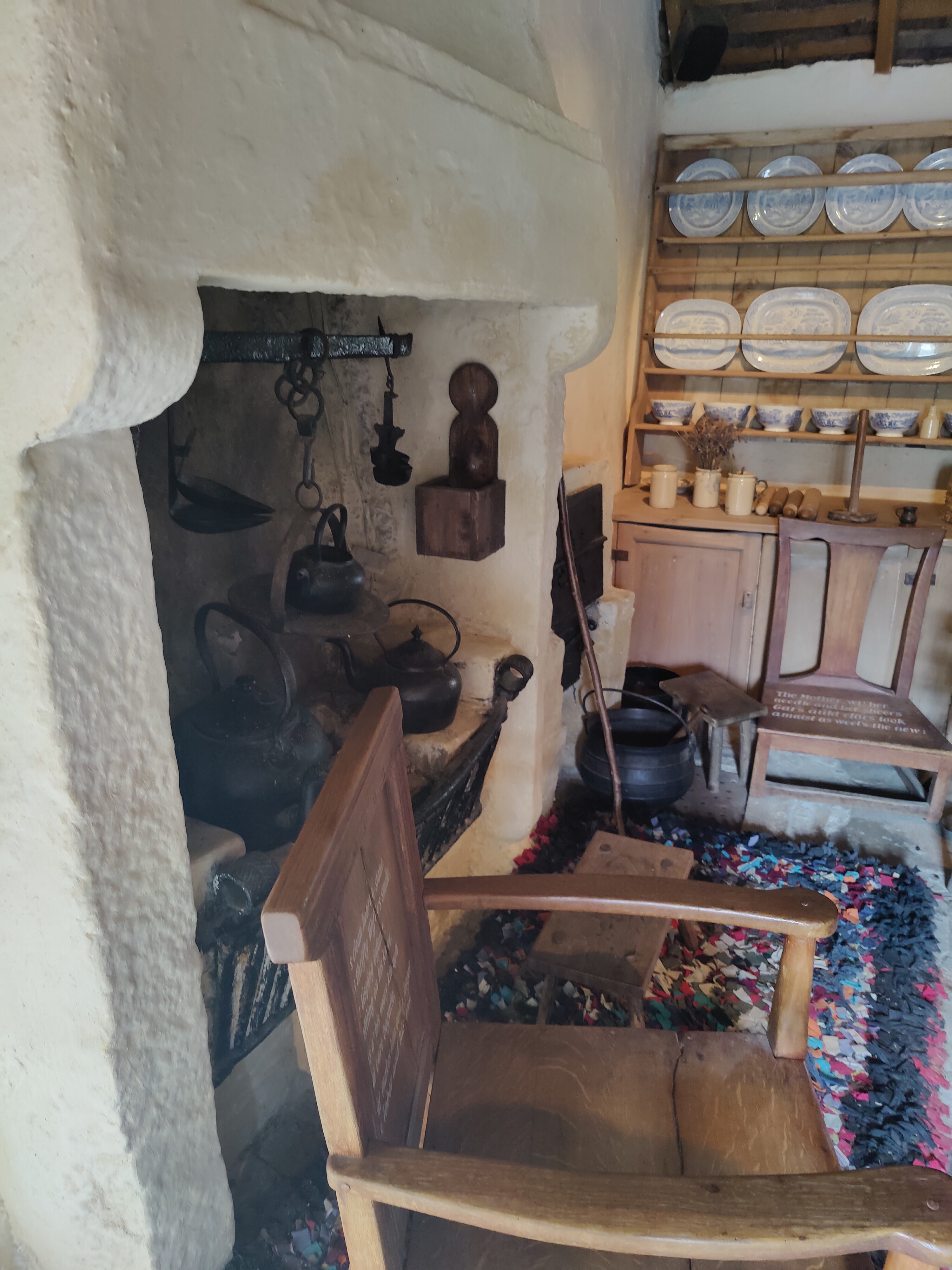
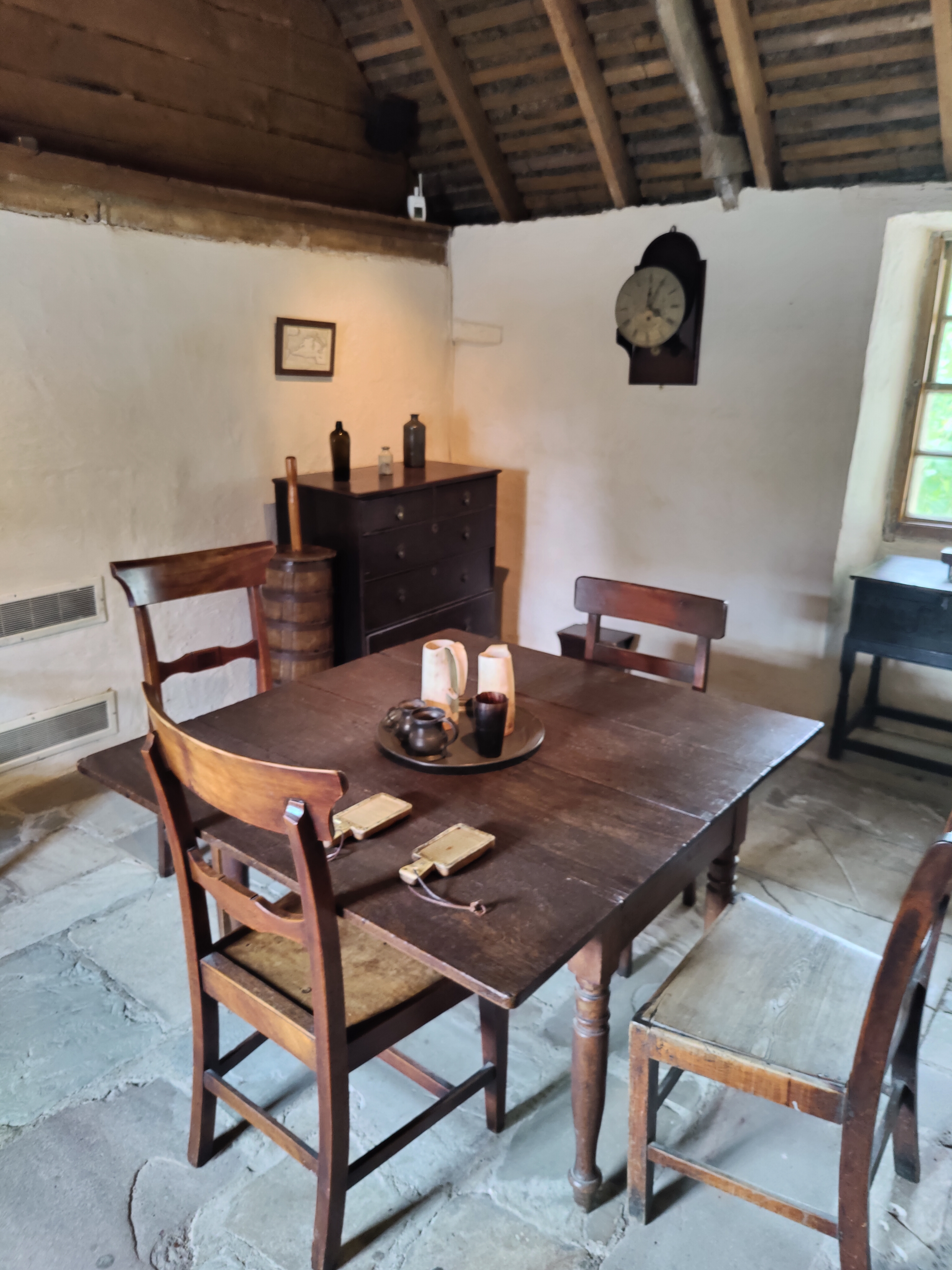
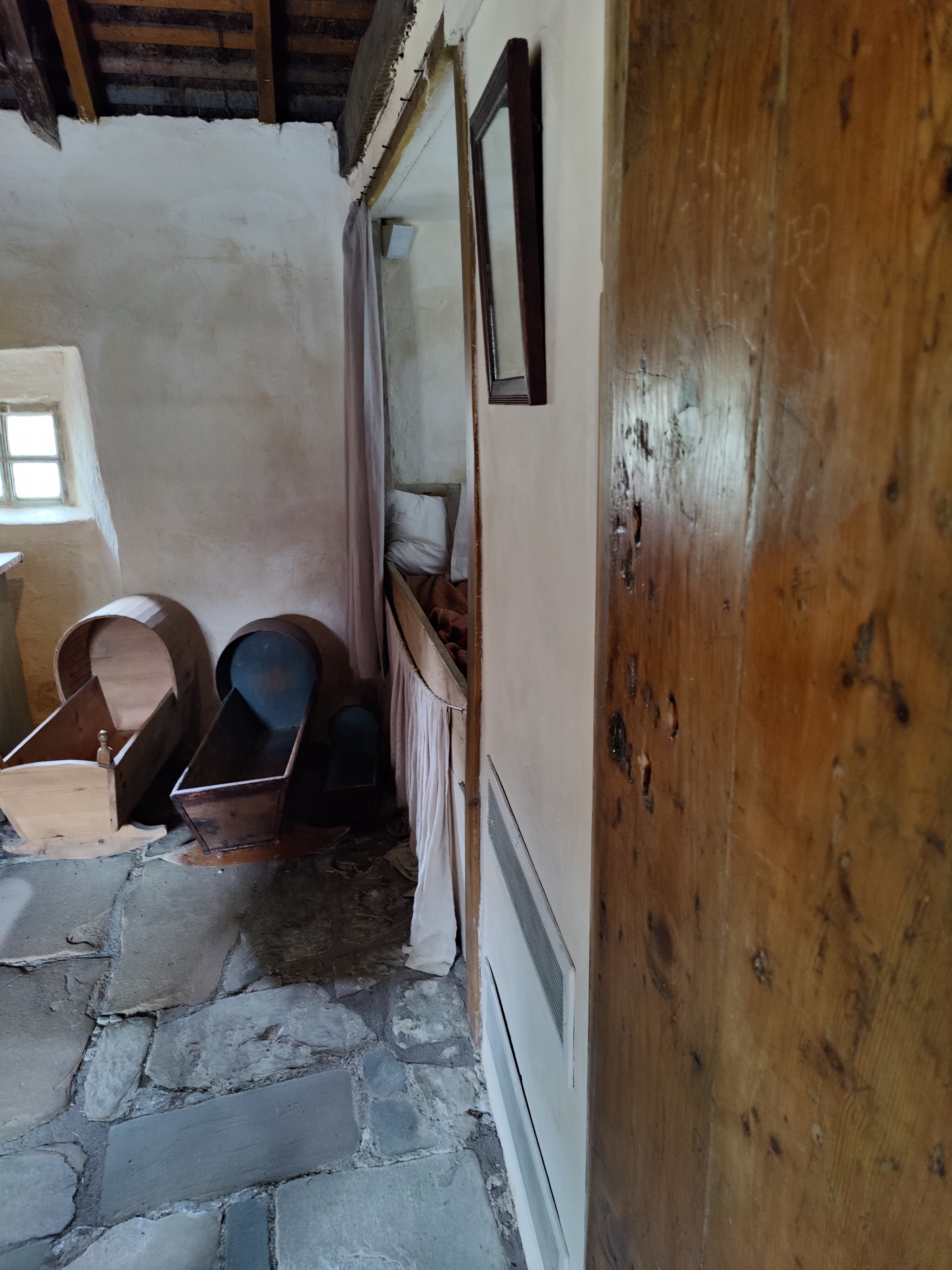
Near the house is Alloway Auld Kirk, the ruins of an old church. It was already a ruin by Burn’s time, and he references in his “Tam o’Shanter” poem.
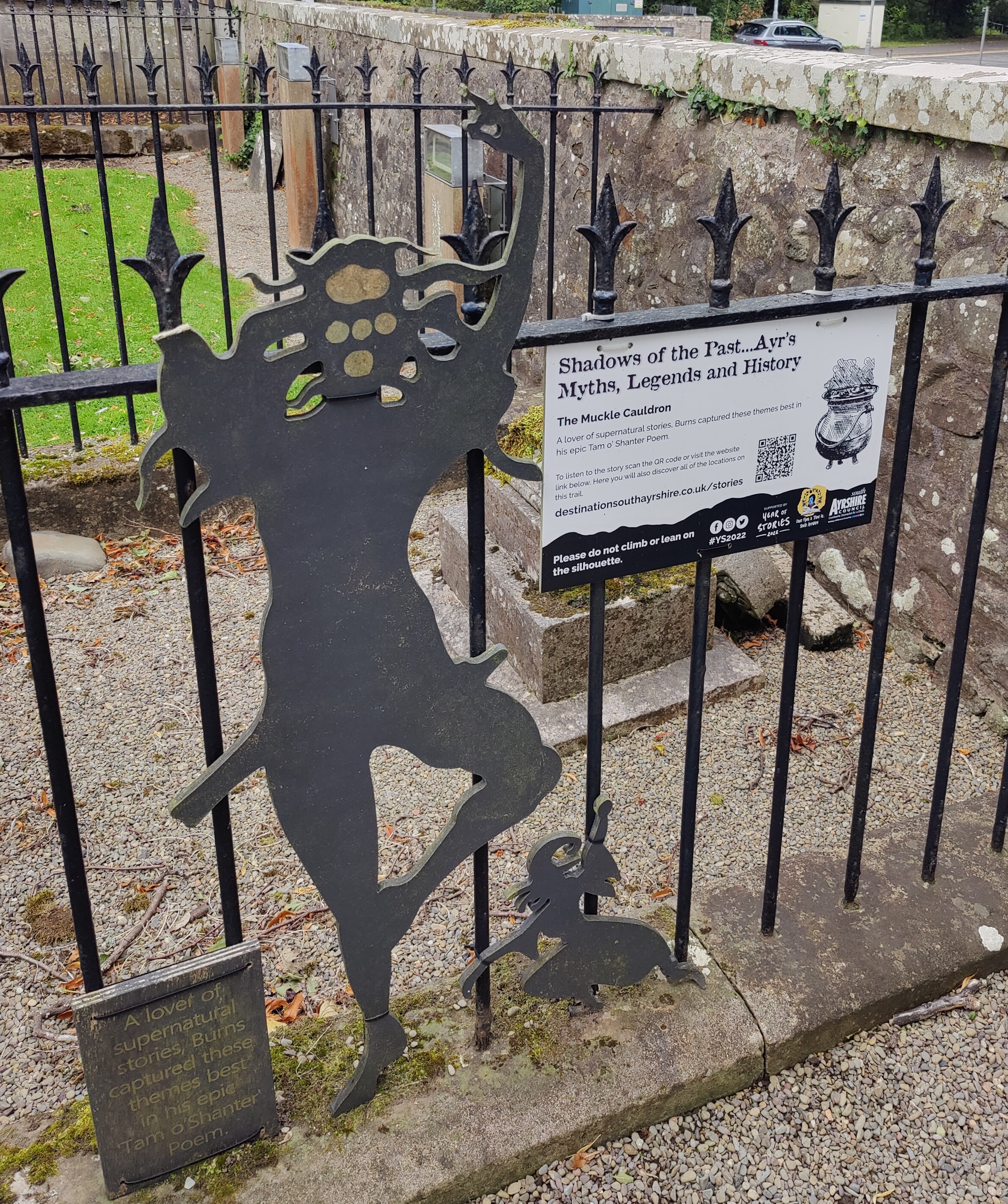
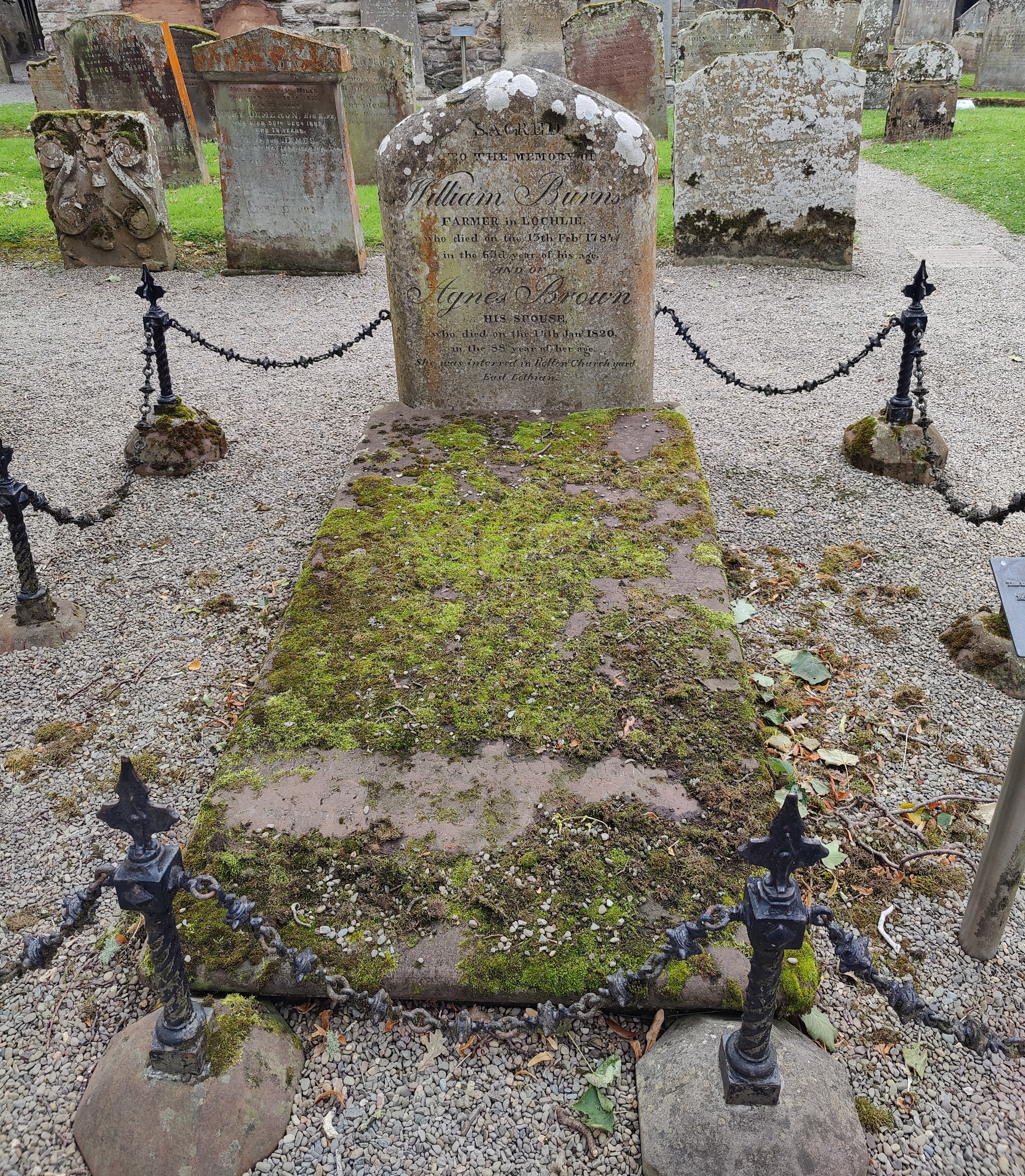
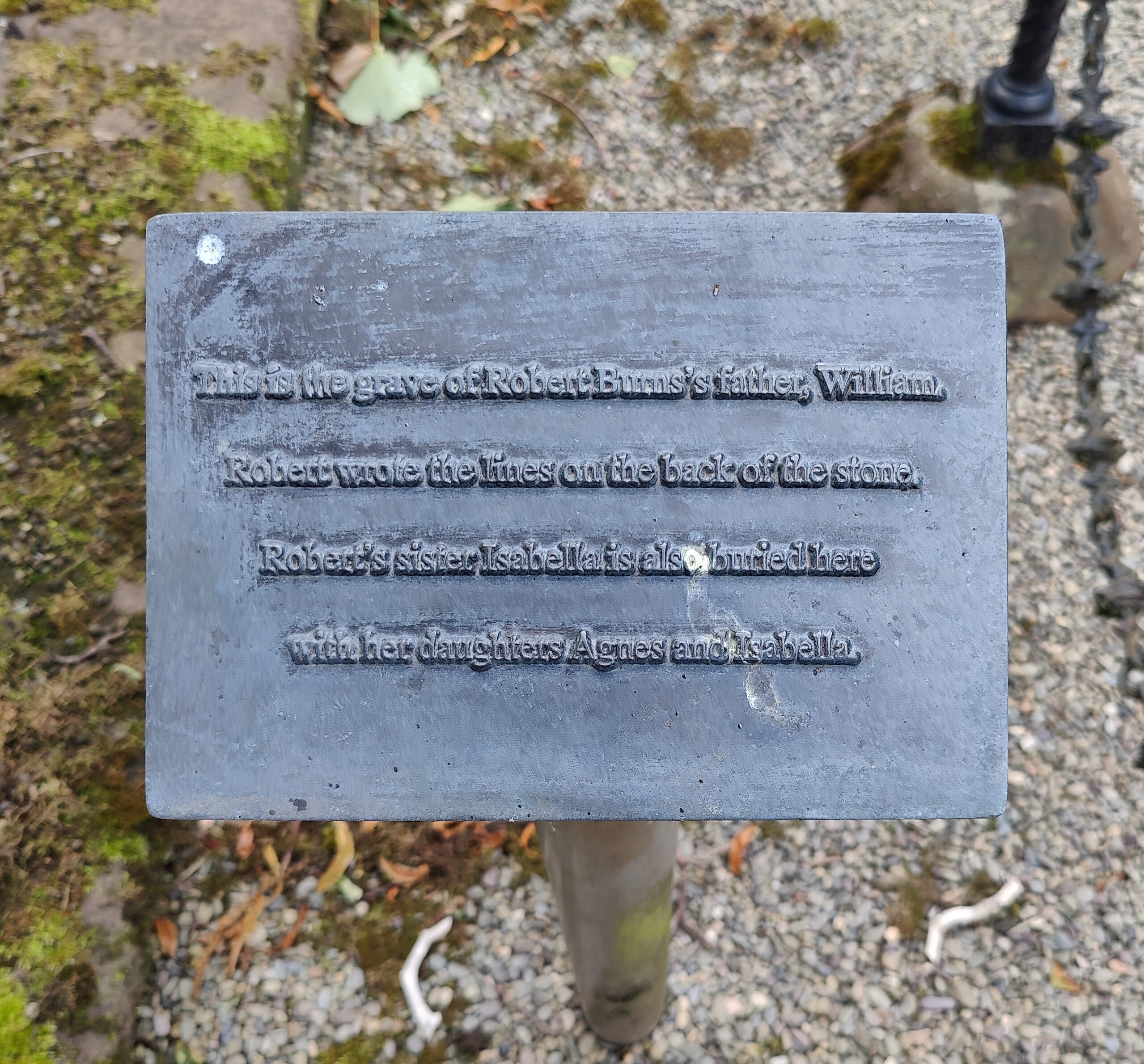
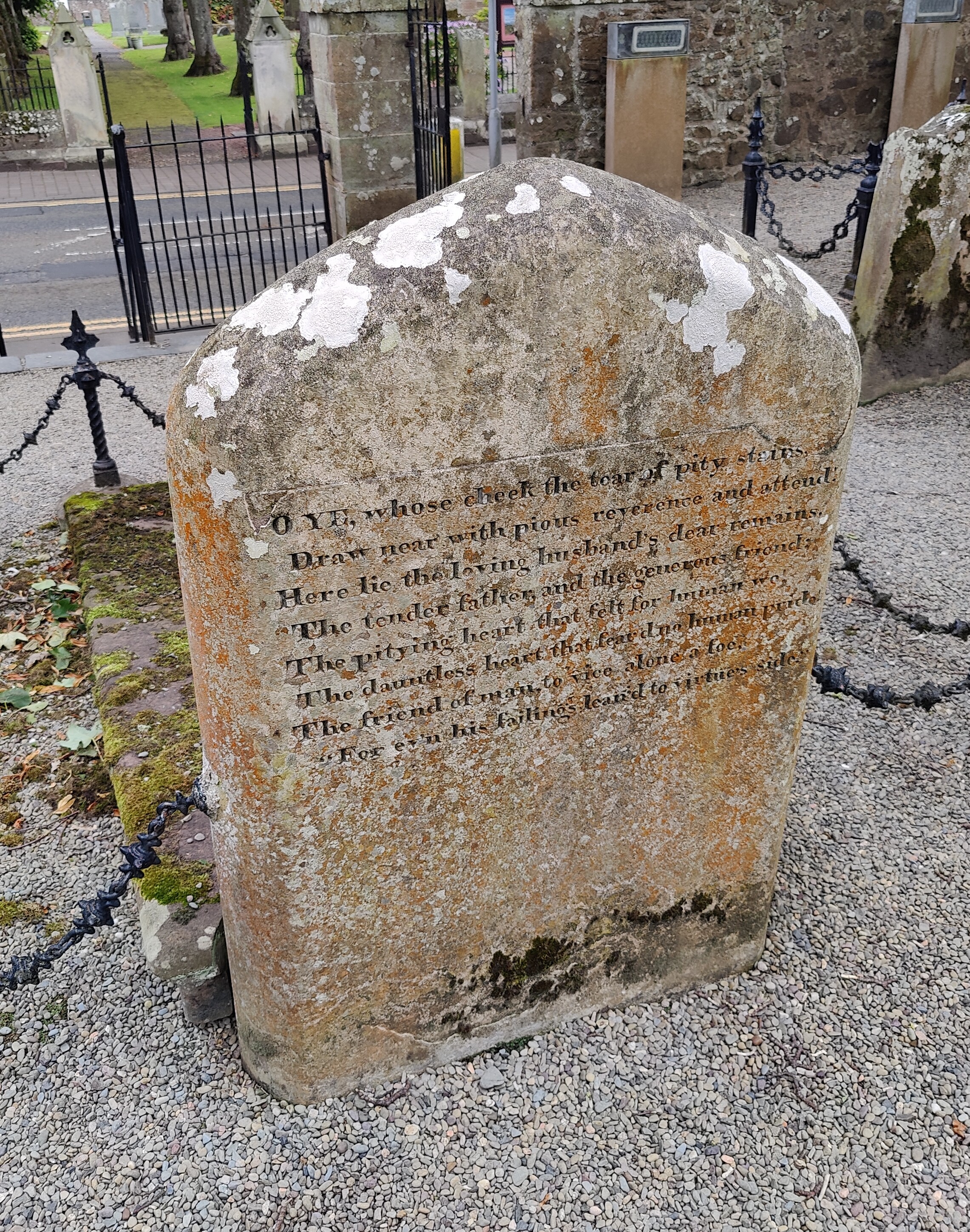
It’s also the final resting place for Burns’ father, William Burnes, and one of his sisters, Isabella Burns Begg. The inscription on Burns’ father’s gravestone, was penned by the bard himself. Side note – this is apparently his third gravestone after the first two were chipped away by souvenir hunters!
And there’s still more to see. Less than 20 years after Burns’ death, some of his most ardent supporters made plans to memorialise him in Alloway, and the result is this 21m (70ft) high Grecian-style temple, designed by Sir Thomas Hamilton Junior.
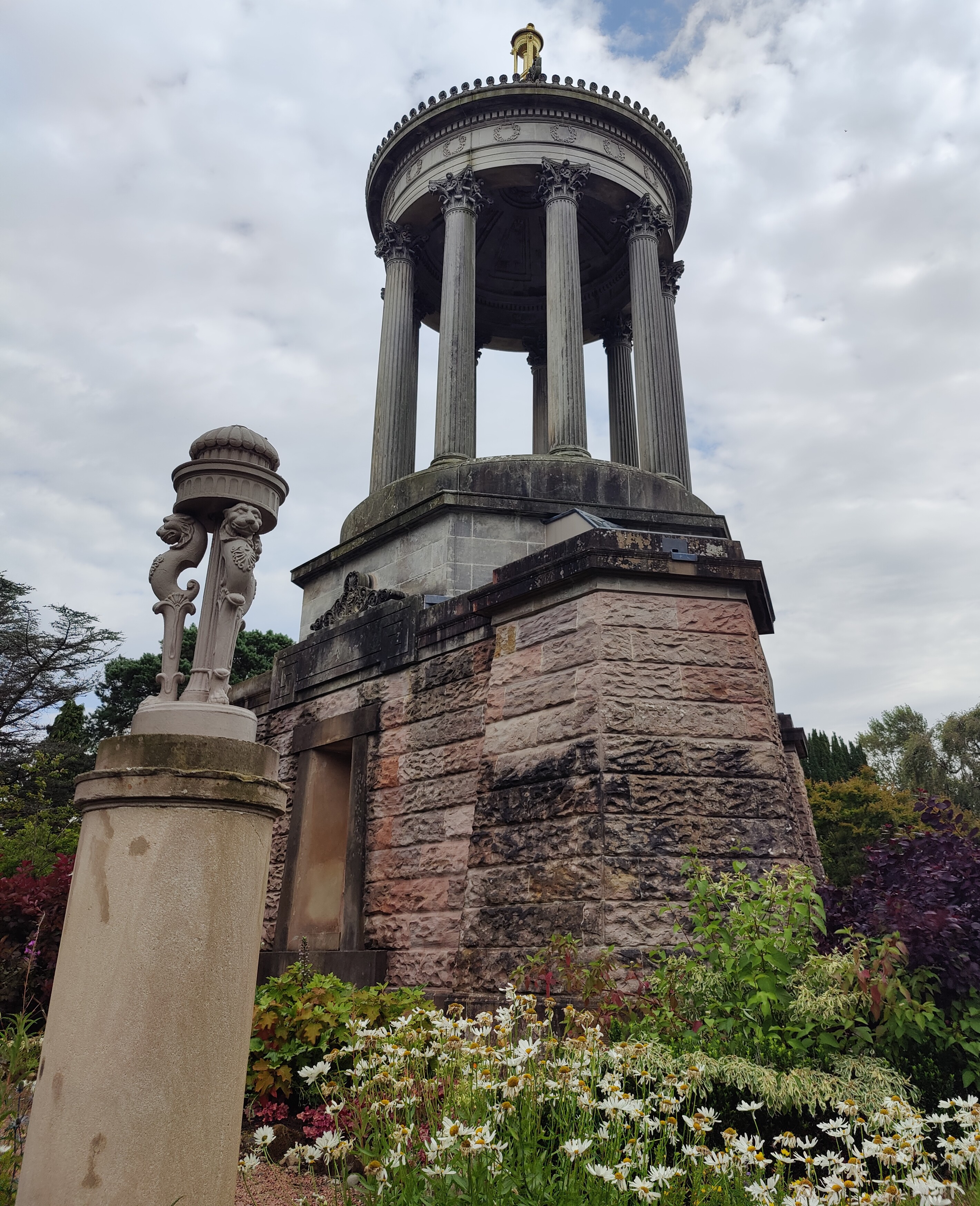
Once you’ve climbed up to it, you can then enjoy a stroll around the landscaped gardens before making your way down to the Brig o’Doon.
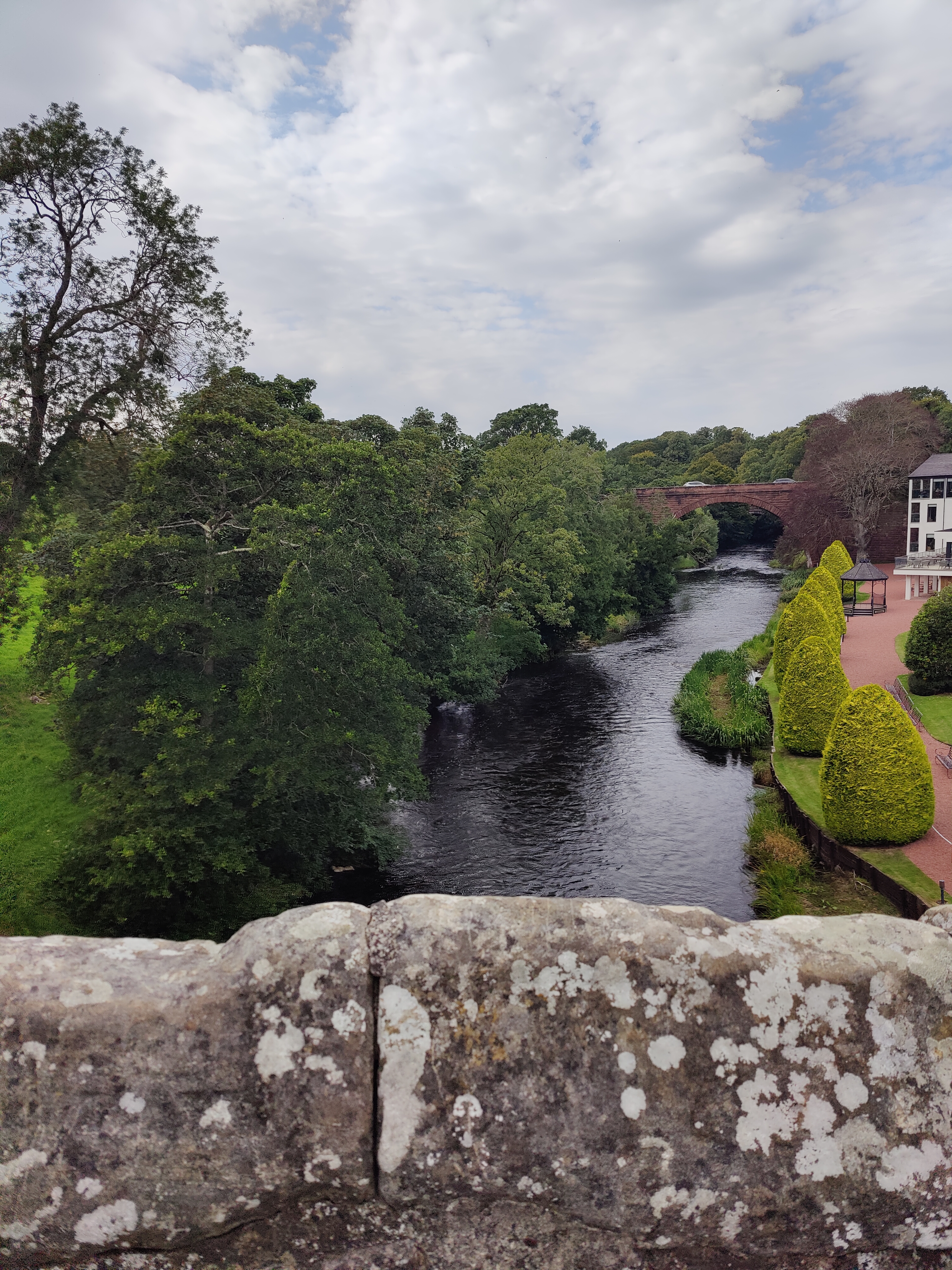
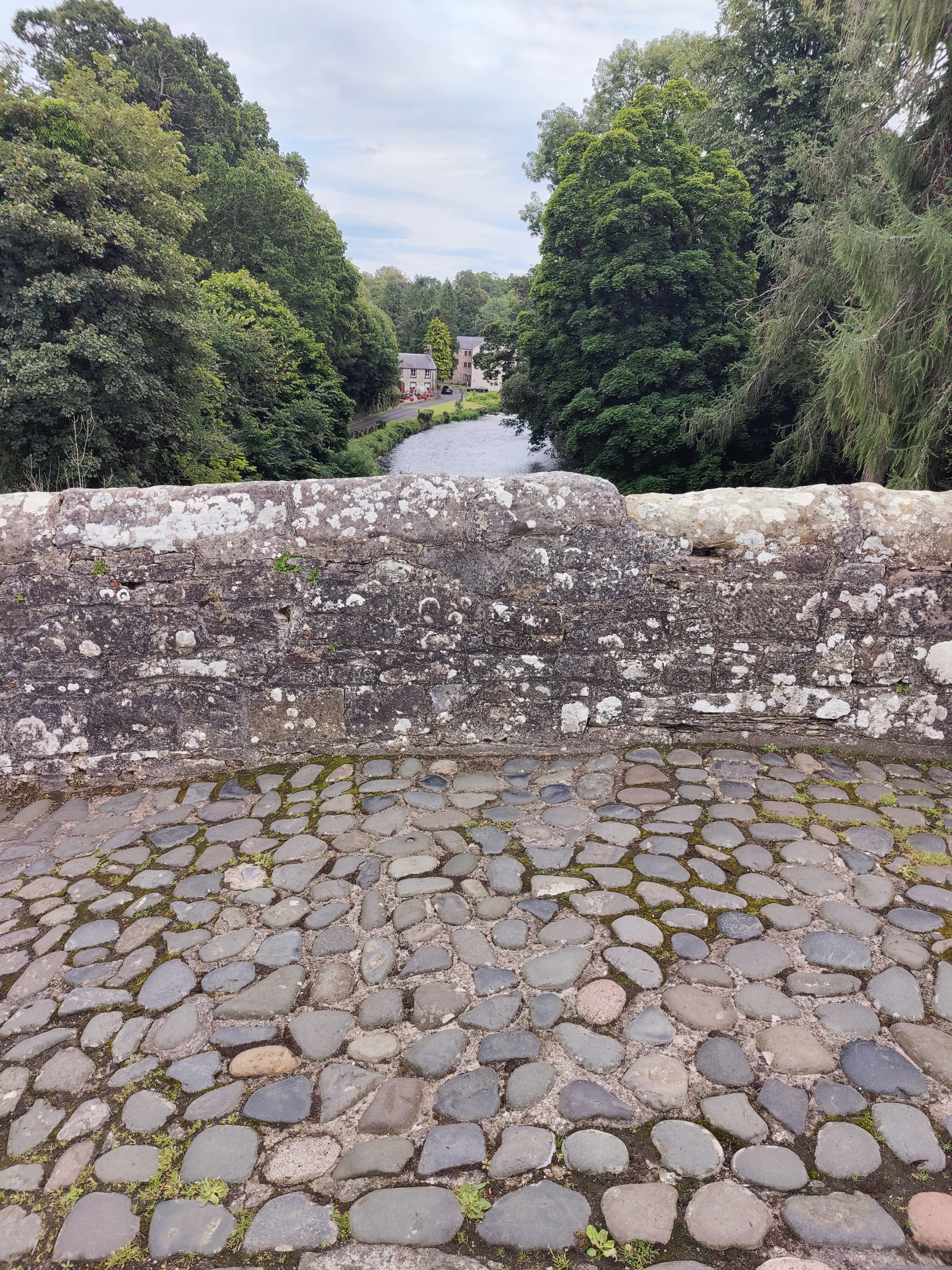
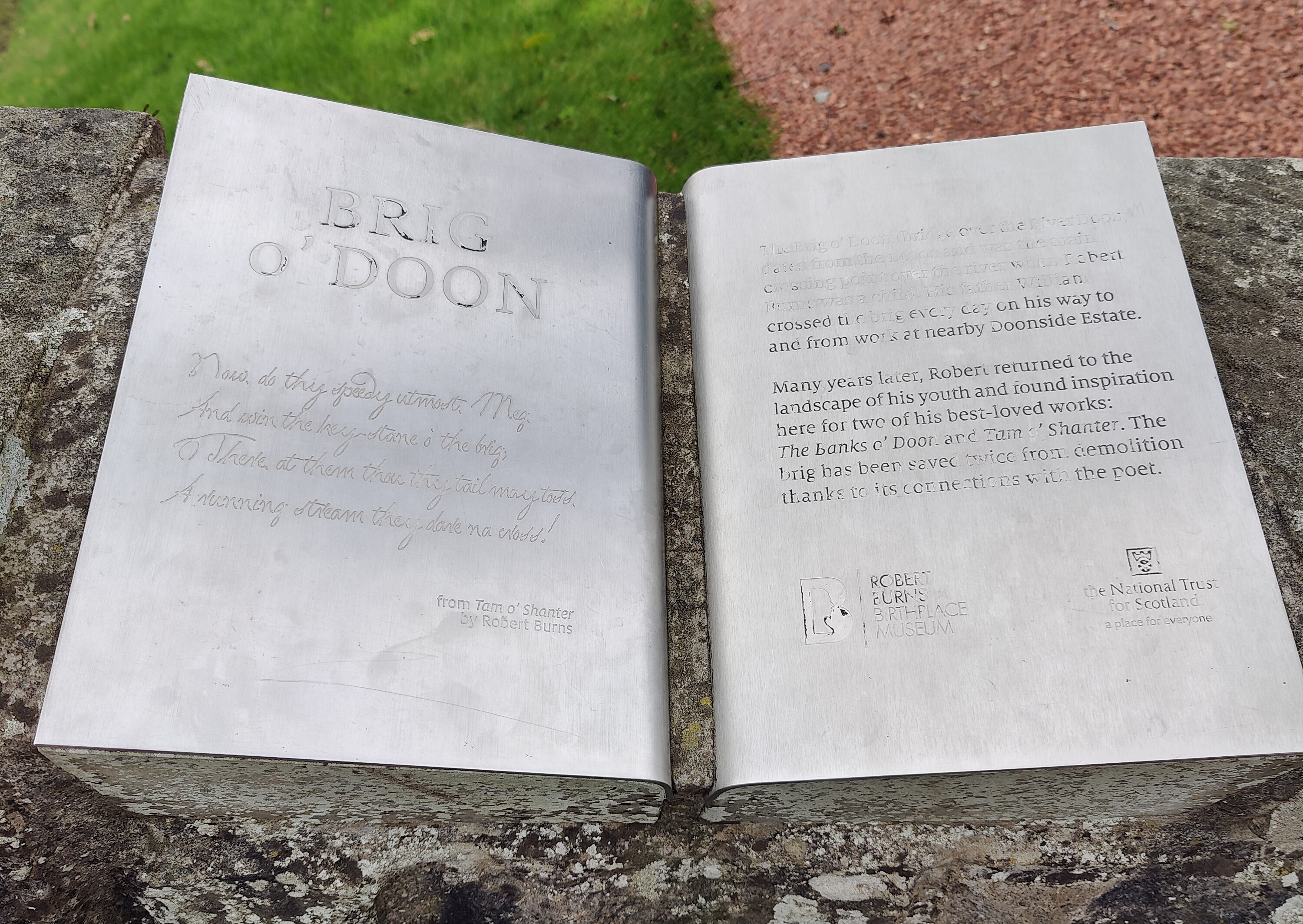
The Brig o’ Doon is an original 15th-century cobblestone bridge, and the setting for one of Burns’ most famous works, “Tam o’Shanter”.
This is the bridge that Tam o’Shanter raced across on horseback, fleeing from the witches and warlocks (as they’re unable to cross water) – although his poor horse Meg still managed to loses her tail. The narrow, arched footbridge is such an iconic landmark that it even features on the Scottish £5 note.
It was great to be able to visit so many sites all in easy walking distance of each other. I would have loved to visit the museum too, but sadly we were pressed for time. I’d thoroughly recommend it if you’re in the area, especially if you have an National Trust membership.
What do you think? Are you a fan of Robert Burns? Have you ever visited his birthplace? Let me know in the comments.


Leave a Reply