
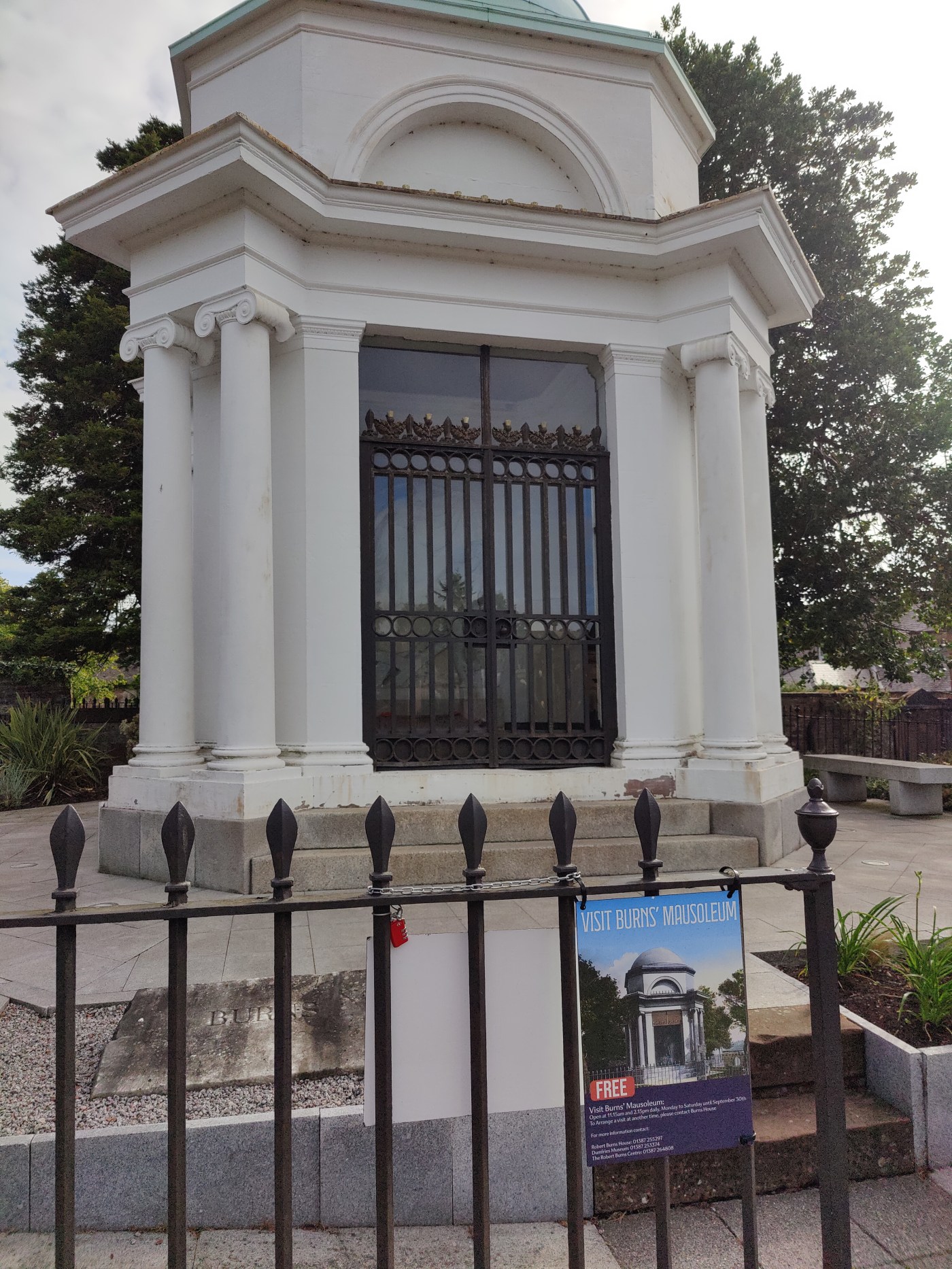
Robert “Rabbie” Burns is widely regarded as the national poet of Scotland – despite the fact he was only 37 when he died. The fact he was able to achieve this status as a Scottish icon during his short life shows how meaningful his work was. So it’s only fitting that he’s buried within a rather distinctive mausoleum. Originally, however, his final resting place was a lot more humble.
Watch our visit to Robert Burns Mausoleum
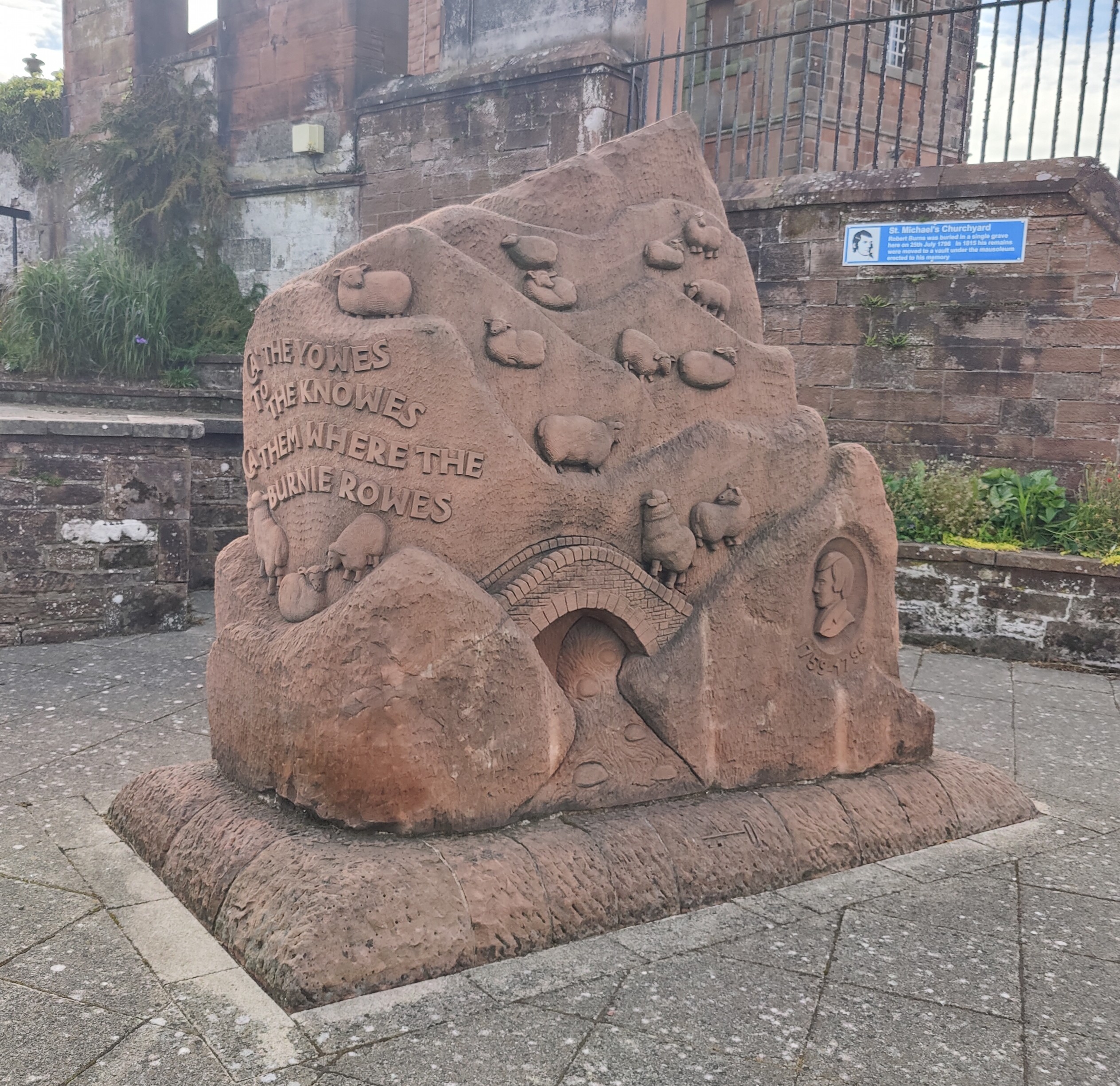
Robert Burns was the eldest of seven children, and although educated mostly by his father, he spent a large part of his early years as a farm labourer. The harsh conditions and back-breaking work he endured doubtless contributed to his premature death.
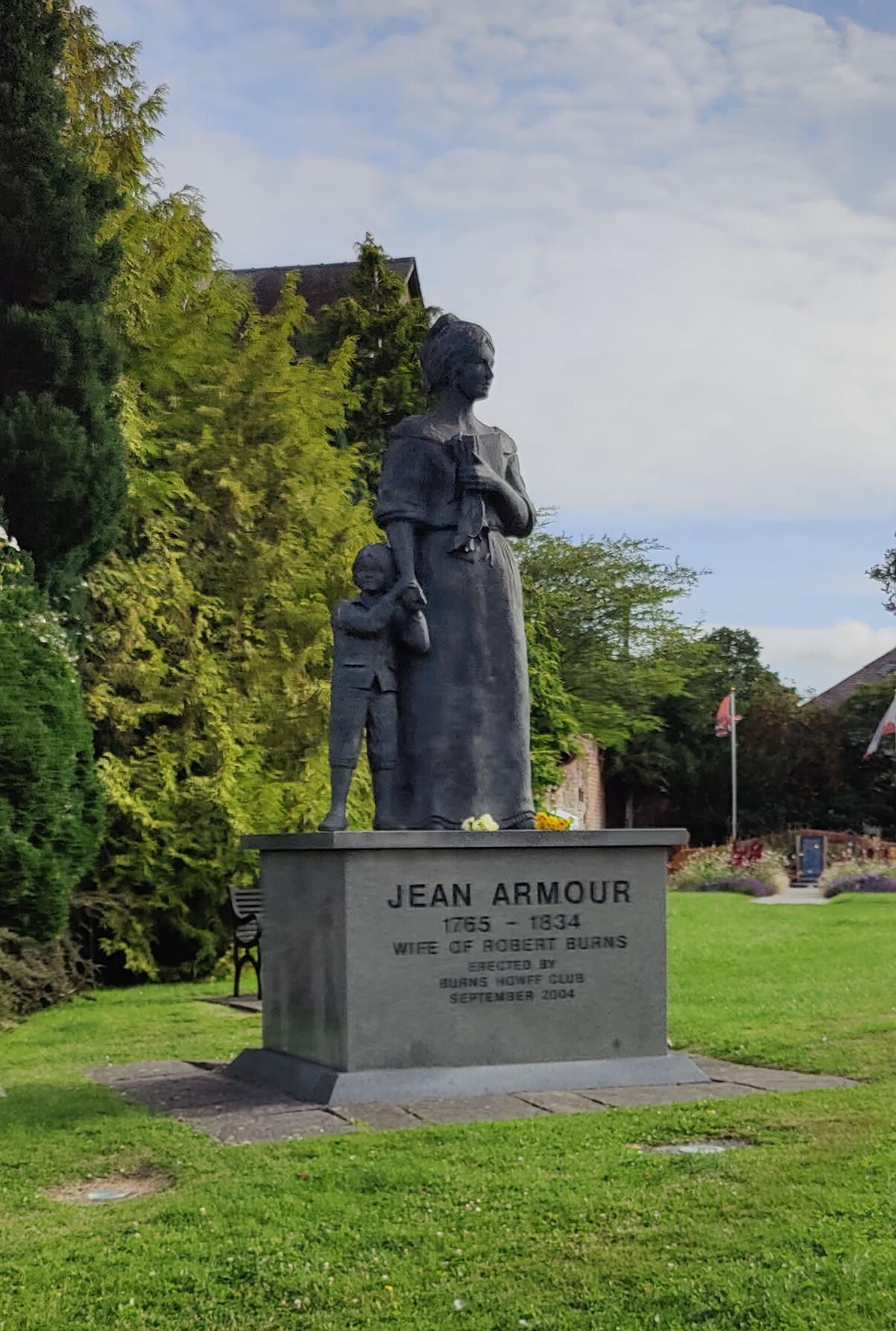
He’s well known for his writing of course, but his personal life also held plenty of drama. He had at least four illegitimate children, as well as nine kids with his eventual wife, Jean Armour, of whom three survived to adulthood.
Robert Burns’ book “Poems, Chiefly in the Scottish dialect”, was published in 1787 and with it came acceptance into aristocratic circles. The 16-year-old Walter Scott described meeting him at a prestigious gathering with great admiration.
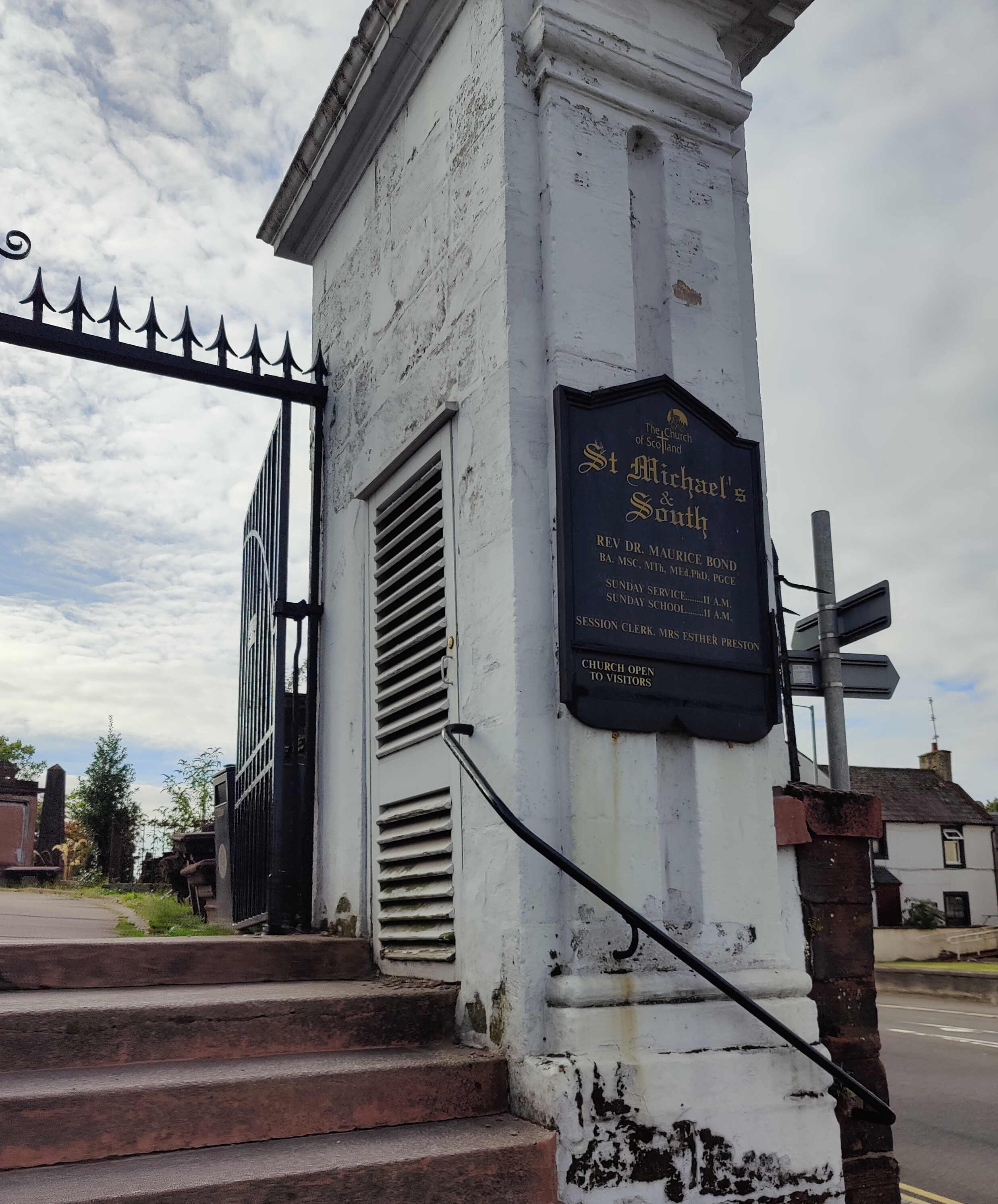
When he died in 1796, Burns was buried in a far corner of St. Michael’s Churchyard in Dumfries, with a simple slab as his gravestone – all his widow could afford. But not long after, some felt that his resting place needed an upgrade, so group of fans got together to publish a circular in November 1813 calling for the public to subscribe to the cost of a mausoleum for Burns. One of the champions for the cause was Sir Walter Scott himself. Money came in from Britain, India and America and by spring 1815 enough funding was in place for the work to begin, carried out by local stonemason, John Milligan.
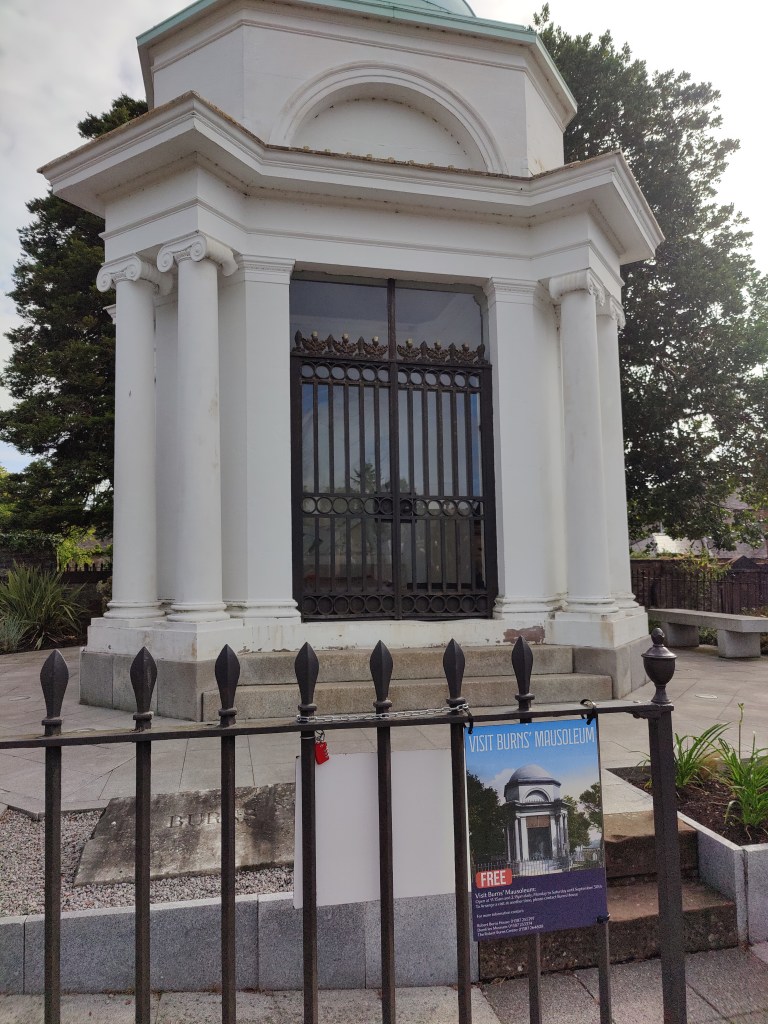
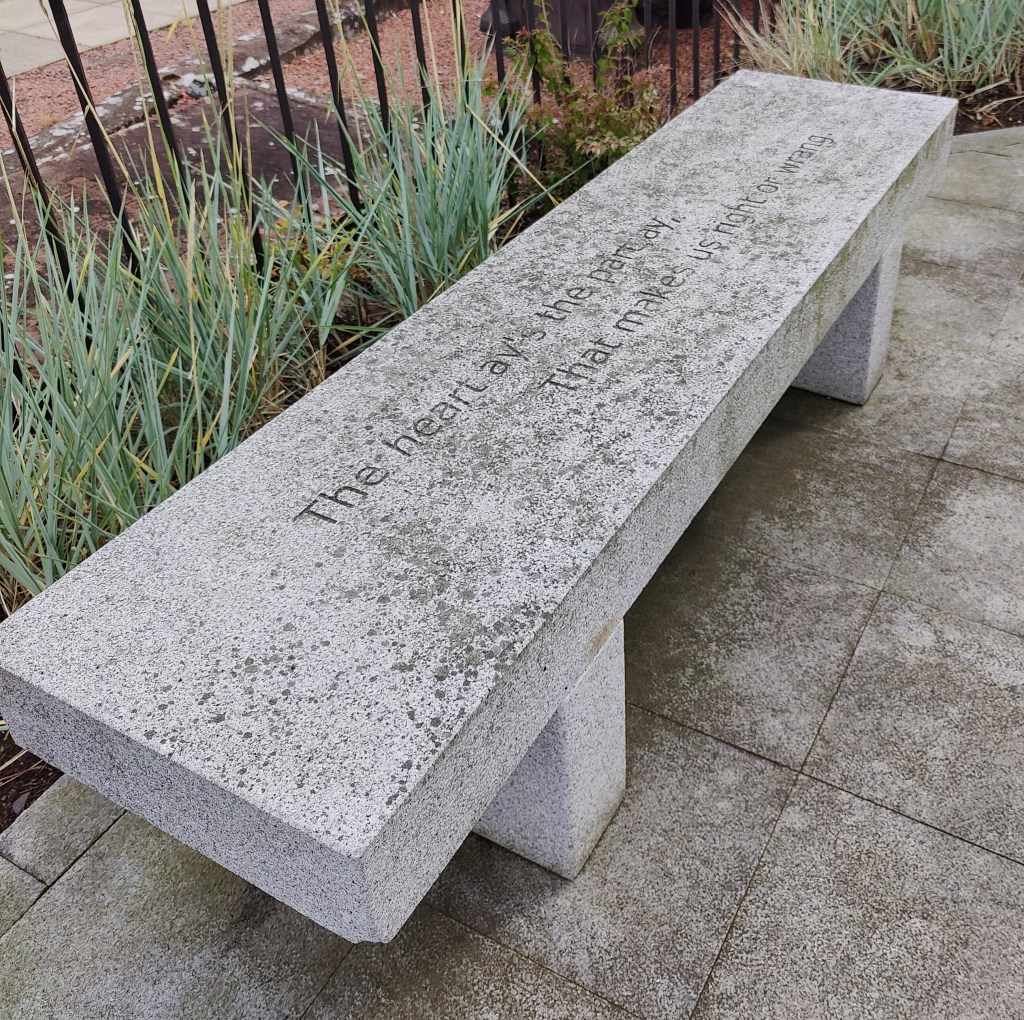
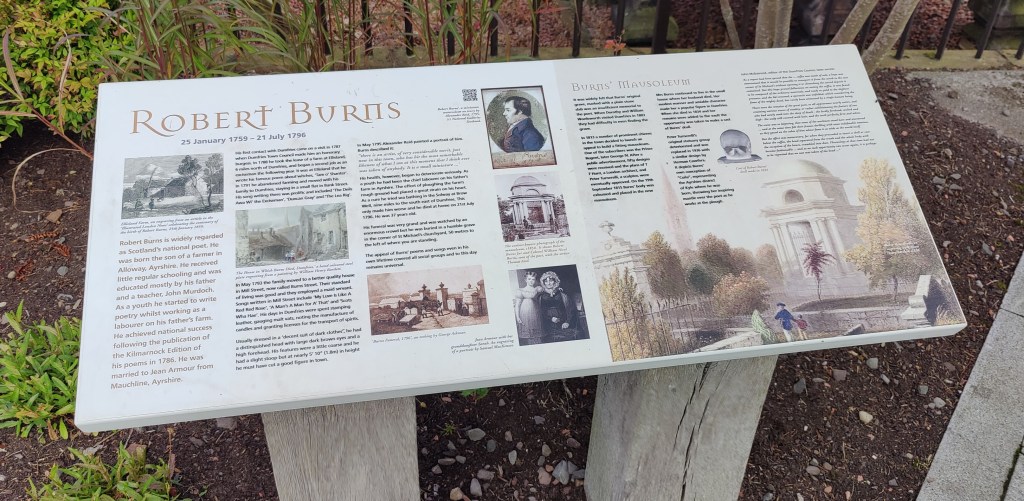
Construction was far from smooth sailing, as Milligan failed to adhere to the design specifications or pay attention to the committee supervising the work, but the mausoleum was eventually finished in 1817. On 19 September 1817, Burns’ remains were disinterred from his original burial place, along with those of two of his young sons, then reinterred under the floor of the new mausoleum.
When his wife Jean Armour died in 1834, she was also buried in the mausoleum, as was his son Robert in 1857. A “fun” side note is that when Jean was interred, some local phrenology enthusiasts took the opportunity (apparently with permission) to borrow Burns skull, make a copy of it and place it back. The copy now resides at the Anatomical Museum in Edinburgh.
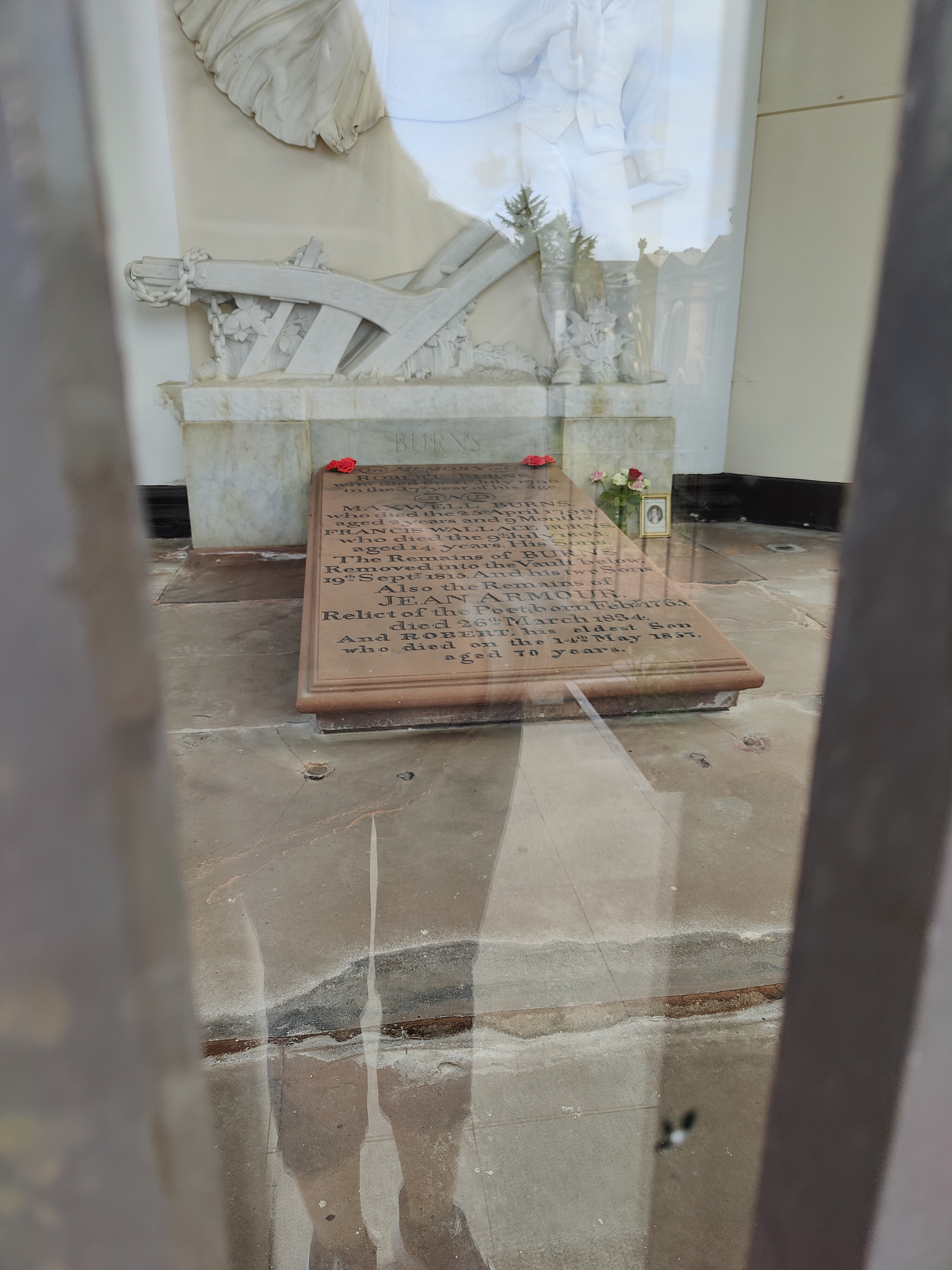
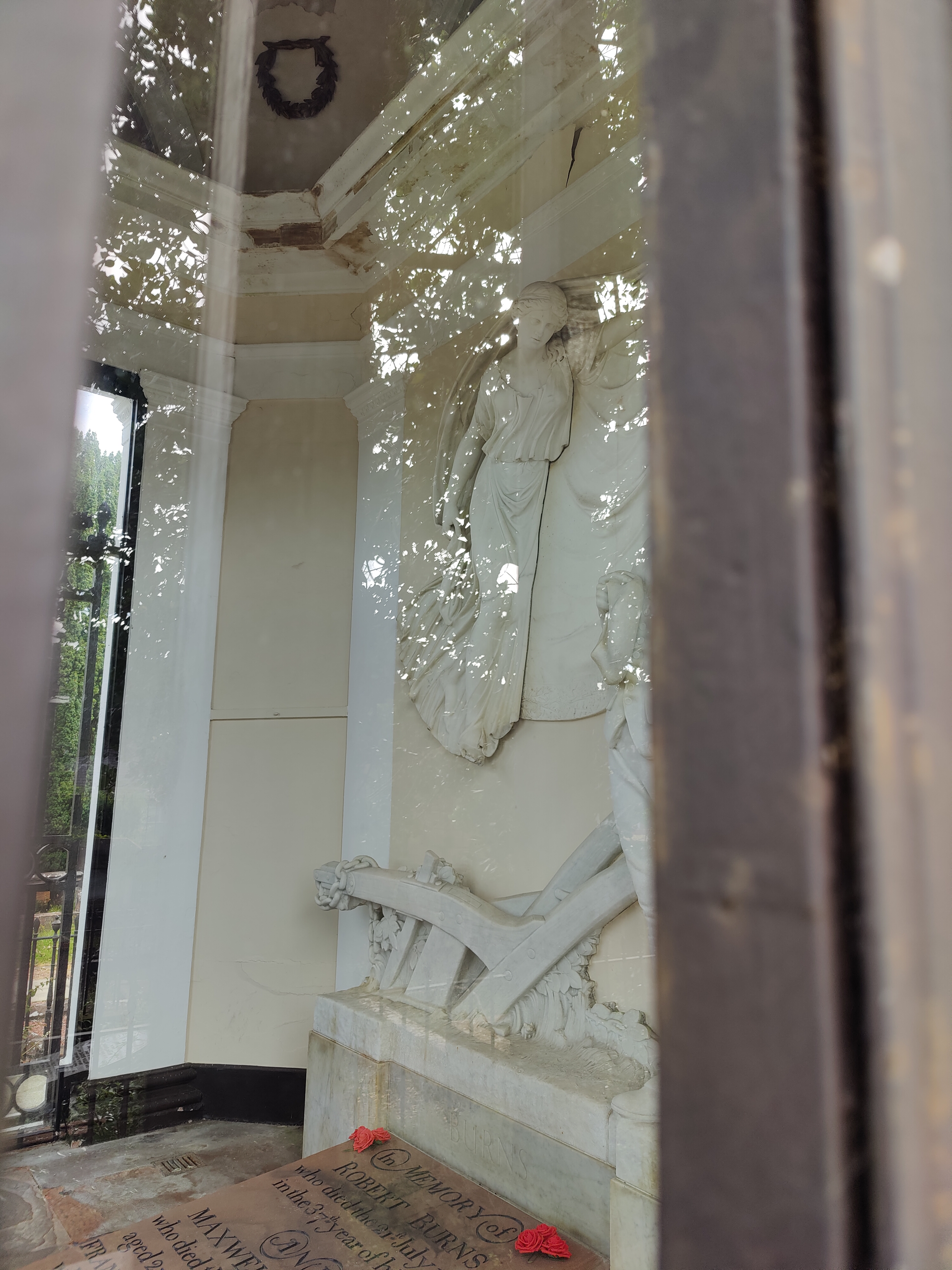
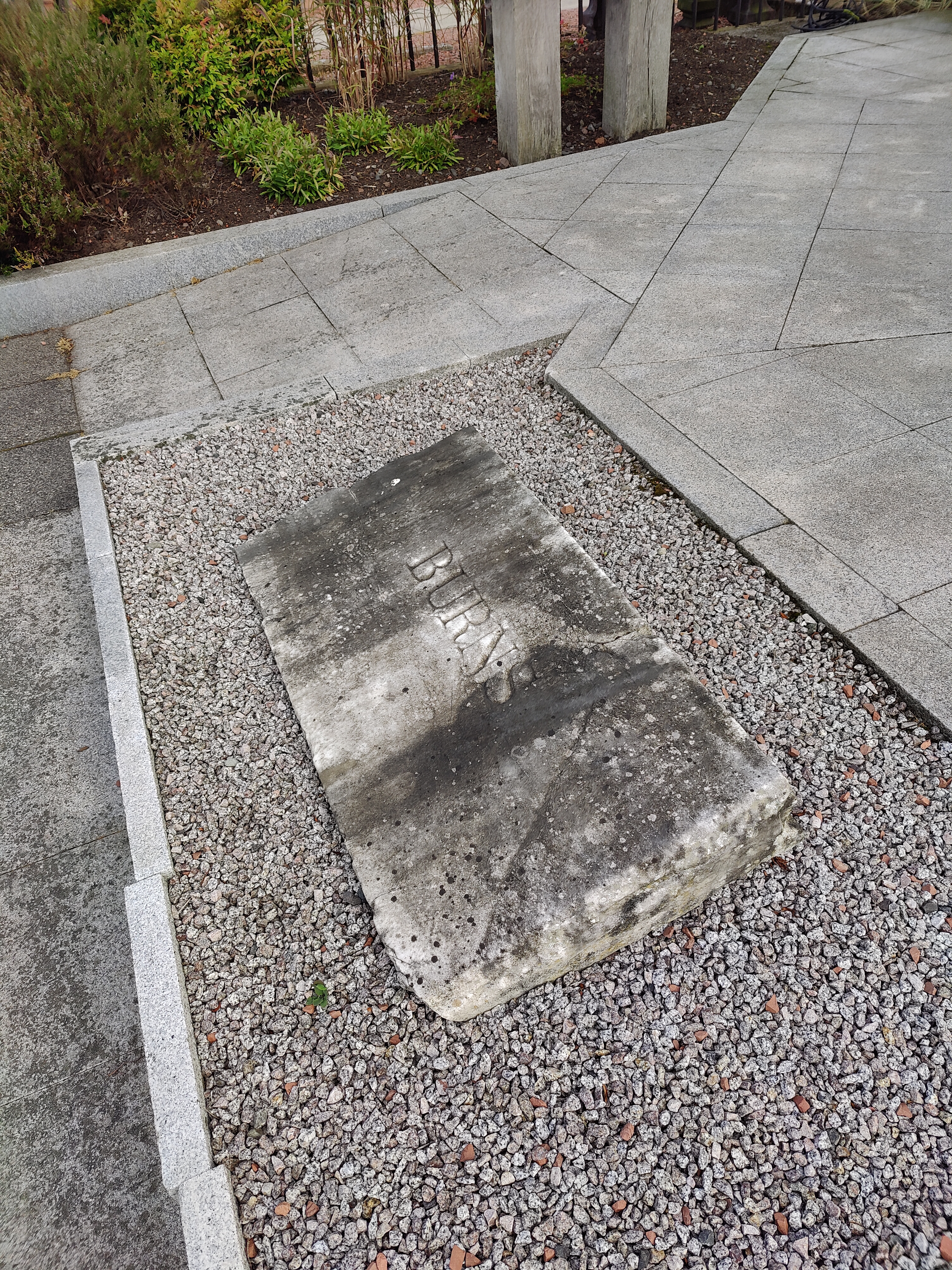
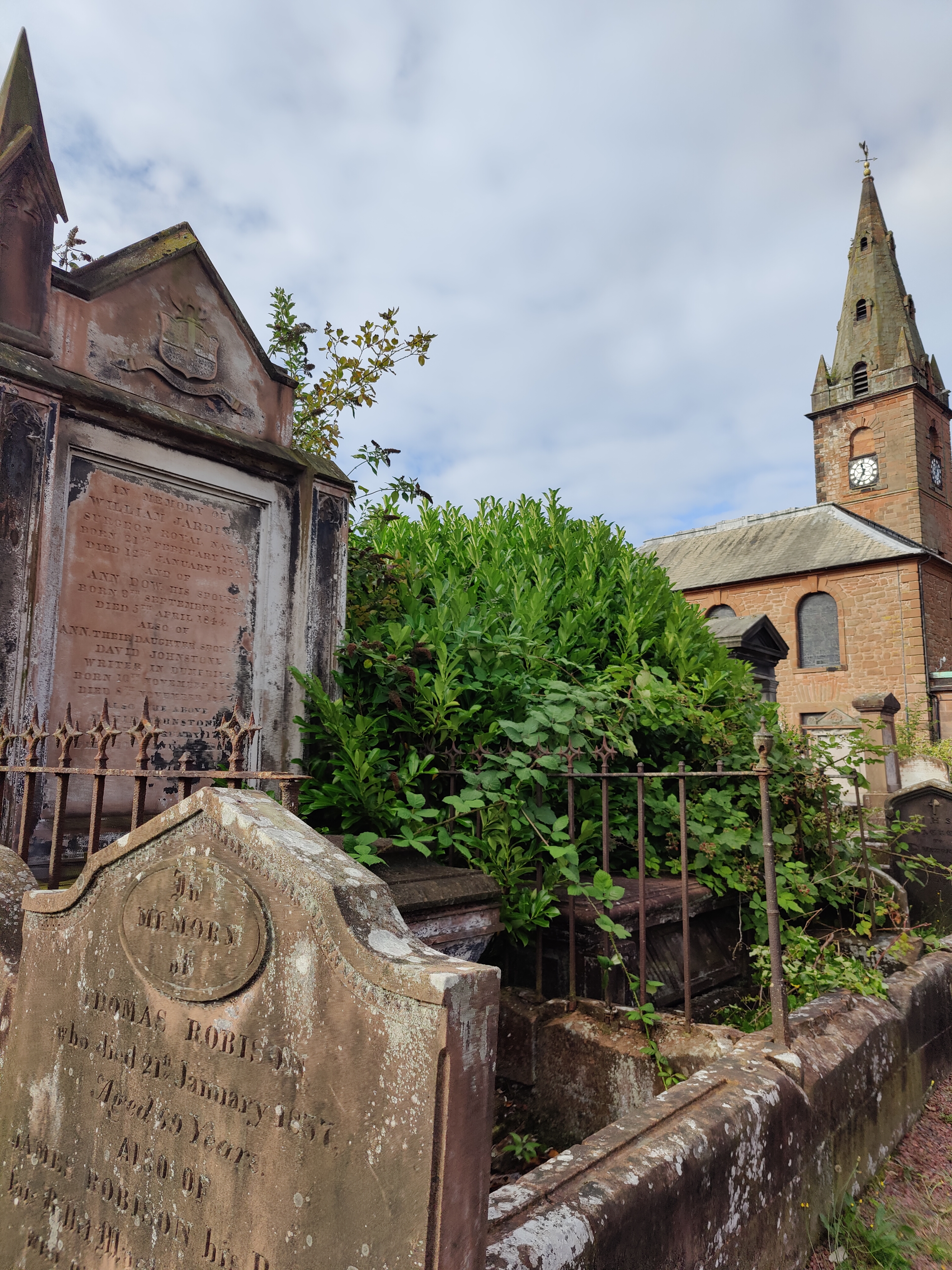
The mausoleum was a book-end to our visit to Burns birthplace, and our visit to Scotland as a whole. It was early morning when we visited St Michael’s, bright clear and quiet. The church and surrounding stones are primarily created from red stone, so the gleaming white blue-domed mausoleum stands out and is easy to find. It’s not open all the time, although I believe there are days it is so you can get a good look inside. I had to take interior pics through the glass. If you’re a Burns fan, it’s certainly a good spot to visit.
What do you think? Have you ever visited Robert Burns’ Mausoleum? Let me know in the comments.


Leave a Reply